Is it gambling if there is no money?
By insiderz8 min read
No, and the reason is in the statutes. Gambling law almost everywhere is built from three elements: a stake, an outcome that turns on chance, and a prize. Take away the stake and the definition is not met, so the licensing regime never engages. The UK, Germany, France, Spain, Italy and Brazil each write the money element into their own text, in their own words, and each one is quoted below.
Last checked: 4 September 2026.
This is not legal advice.
What are the three elements of gambling?
A stake, chance and a prize. A stake is something of value the participant risks. Chance means the outcome is not fully under the participant's control. A prize is something of value the participant can win. Where a country writes its definition as a single sentence, all three usually appear in it.
New York's criminal code is a clean example, because it puts the stake and the prize in the same clause. Under New York Penal Law § 225.00(2), a person engages in gambling "when he stakes or risks something of value upon the outcome of a contest of chance or a future contingent event not under his control or influence, upon an agreement or understanding that he will receive something of value in the event of a certain outcome". Something of value in, something of value out.
The UK splits the same idea across sections. Section 3 of the Gambling Act 2005 says gambling means gaming, betting or participating in a lottery. Section 6 defines gaming as playing a game of chance for a prize, and defines prize as money or money's worth. Section 9 defines betting as making or accepting a bet on the outcome of an event or on the likelihood of anything occurring.
Why does removing the stake remove the problem?
Because the stake is a condition of the definition, not a feature of the product. If it is absent, there is no gambling to license, prohibit or block, whatever the activity looks like.
The UK Gambling Commission has said this in its own words. Its discussion paper Virtual currencies, eSports and social gaming, published in August 2016, describes a bet as "a participant hazarding money or money's worth (stake) on an event which has a doubtful outcome to allow the oppurtunity of obtaining winnings" (the typo is in the original). The same paper says at paragraph 5.1 that gambling-style games "may need a licence depending on whether players are staking money or if there is a prize of money or money's worth".
Germany is even more compressed. Section 3(1) sentence 1 of the Glücksspielstaatsvertrag 2021 reads: "Ein Glücksspiel liegt vor, wenn im Rahmen eines Spiels für den Erwerb einer Gewinnchance ein Entgelt verlangt wird". Gambling exists where a payment is demanded for acquiring a chance to win. Sentence 3 catches event betting specifically: "Wetten gegen Entgelt auf den Eintritt oder Ausgang eines zukünftigen Ereignisses sind Glücksspiele", bets for payment on the occurrence or outcome of a future event are gambling. The German regulator's own FAQ on Gesellschaftswetten, published on 13 August 2026, quotes that same first sentence when explaining why paid event bets are illegal.
France writes it as a fourth criterion. The Autorité nationale des jeux tells project owners that an offer is a jeu d'argent et de hasard when it is made to the public, creates an expectation of gain, that gain is due even partly to chance, and there is "un sacrifice financier exigé de la part des participants", a financial sacrifice required from participants.
Spain uses a wider phrase but the same structure. Article 3(a) of Ley 13/2011 defines juego as an activity in which "se arriesguen cantidades de dinero u objetos económicamente evaluables" on future and uncertain outcomes. Amounts of money, or objects with an economic value. Note the second half: in Spain a play currency you can buy is not obviously outside the definition, which is one reason a platform that sells nothing is on safer ground than one that sells chips.
Italy locates the money element in a profit purpose. Article 721 of the codice penale defines games of chance as those "nei quali ricorre il fine di lucro e la vincita o la perdita è interamente o quasi interamente aleatoria", games in which a profit purpose is present and winning or losing is entirely or almost entirely random. No profit purpose, no giuoco d'azzardo.
Why do we also award no prizes?
Because the prize is the second element, and several regimes attach to it on its own. A free entry draw with a cash prize is still regulated in many countries as a lottery or a prize competition, and the UK definition of a prize as "money or money's worth" is broad enough that vouchers, credits and tradeable items can count.
A platform that takes no stake but hands out cash is arguing about one element instead of two. A platform that does neither is not arguing at all. insiderz has no money in it in either direction: no deposits, no purchasable currency, no prize pool, no token. The thing you get for being right is a public record.
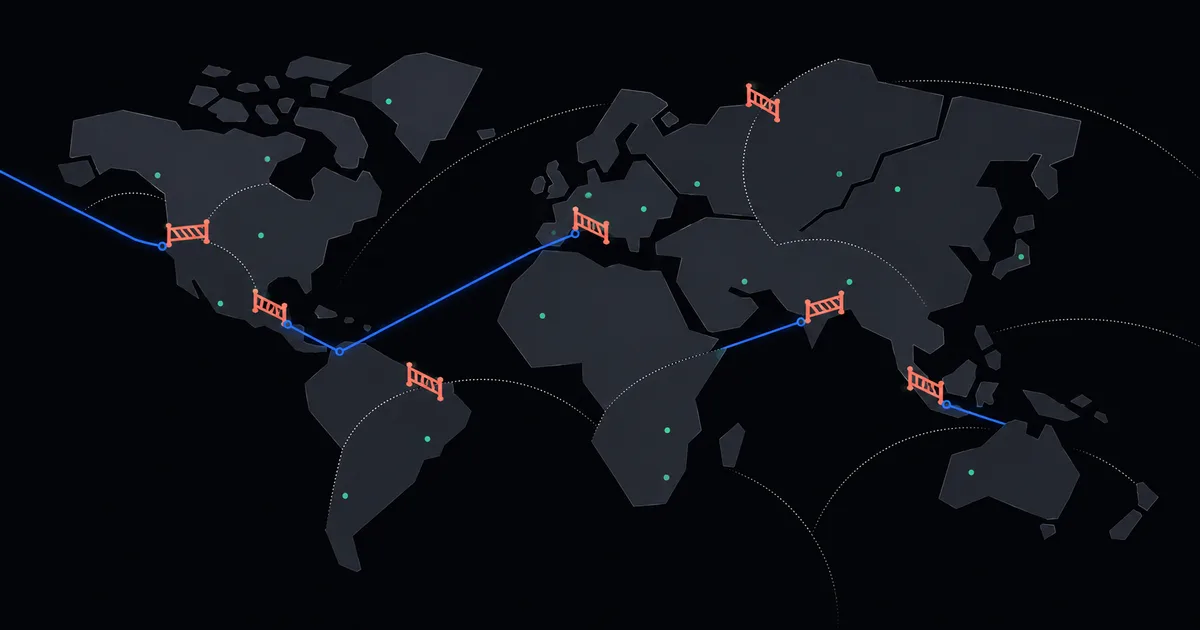
Is it gambling in your country?
Here is the money element, jurisdiction by jurisdiction, as of 4 September 2026. Every cell points at a statute or a regulator document linked in the sources.
| Jurisdiction | Instrument | Words that require money | Forecasting with no stake and no prize caught? | Checked |
|---|---|---|---|---|
| United States (New York) | Penal Law § 225.00(2) | "stakes or risks something of value" | No | 4 Sep 2026 |
| United Kingdom | Gambling Act 2005, ss. 3, 6, 9 | prize means "money or money's worth" | No | 4 Sep 2026 |
| Germany | GlüStV 2021, § 3 Abs. 1 | "ein Entgelt verlangt wird" | No | 4 Sep 2026 |
| France | Code de la sécurité intérieure, art. L. 320-1 | "sacrifice financier exigé" | No | 4 Sep 2026 |
| Italy | Codice penale, art. 721 | "il fine di lucro" | No | 4 Sep 2026 |
| Spain | Ley 13/2011, art. 3(a) | "cantidades de dinero u objetos económicamente evaluables" | No | 4 Sep 2026 |
| Brazil | Resolução CMN 5.298/2026, art. 3 | prohibits derivative contracts on listed events | No | 4 Sep 2026 |
Brazil is the row that works differently, which is why it is worth reading twice. Resolução CMN nº 5.298, adopted on 24 April 2026 and in force from 4 May 2026, does not use gambling language at all. Article 3 prohibits offering and trading in Brazil derivative contracts whose underlying is a real sporting event, a virtual online gaming event, or a real or virtual event of a political, electoral, social, cultural or entertainment nature that the securities regulator does not treat as an economic or financial benchmark. Article 4 extends the prohibition to offers in Brazil of derivatives traded abroad. The instrument bites on derivative contracts, and a public forecast is not a contract.
Where is it still murky?
Three places, and it is better to name them than to pretend the picture is clean.
The first is the United States, where the federal and state tracks are in open conflict. The Congressional Research Service reported on 20 March 2026 that the CFTC asserts exclusive jurisdiction over event contracts listed on designated contract markets, that several states have challenged that position in court, and that the litigation is ongoing. That fight is about regulated money contracts. It does not reach a platform with no contract and no money, but it does mean anything you read about US prediction market legality has a short shelf life.
The second is what counts as consideration. US state definitions of consideration are not identical, and a few have historically treated substantial non-monetary effort as enough. The safe reading is that a platform which asks for no payment of any kind, direct or indirect, is not relying on a fine distinction.
The third is the wallet. A platform can use a crypto wallet purely as a login and still hold no crypto assets for anyone. insiderz uses a wallet signature as identity, in the Sign in with Ethereum pattern, with no email and no name. There is no token, no balance and nothing transferable. That distinction matters when someone asks whether a wallet makes a product a financial one, and it is the kind of question worth putting to a lawyer in your own jurisdiction rather than settling from a blog post.
What does a no money platform actually give you?
A record you cannot rewrite. On insiderz you make a call on the same yes or no events Polymarket lists. A call is yes or no plus how sure you are.
The call is locked the second you post it. The time and the Polymarket price at that moment are frozen, and the call cannot be edited or deleted, not by you and not by us. When the event resolves, the call is scored against the market price that was frozen with it. Being right where the market was wrong is what counts, and the leaderboard ranks insiders on Beats market, Events, Edge and Early.
What this article is not
It is not legal advice, and it is not a green light for any specific platform. It is a map of one element, the stake, across seven jurisdictions, with the primary text quoted so you can check it yourself. Gambling law is local, enforcement practice is local, and the regulator documents linked above are the ones that will change first.
If you are trying to work out what you can use from where you live, read where Polymarket is blocked for the country picture, Polymarket in France and Belgium and Polymarket in Germany for two worked examples, and the comparison of free prediction platforms for what each no money option actually scores.
Questions people ask
- Is forecasting without money gambling?
- No. Gambling law almost everywhere requires something of value to be staked and something of value to be won. Remove both and the definition is not met, so no gambling licence question arises.
- Do free prediction platforms need a gambling licence?
- Generally no, where there is no purchasable currency and no prize. The stake element is written into the statute in the UK, Germany, France, Spain and Brazil, and into US state definitions such as New York's.
- What counts as a stake?
- Money, or something with money's worth. The UK Gambling Commission describes a bet as hazarding money or money's worth. France calls it a financial sacrifice. Germany calls it an Entgelt. Spain speaks of amounts of money or economically valuable objects.
- Why do you award no prizes either?
- Because a prize is the second element. A platform with no stake but a cash prize can still fall inside a lottery or prize competition regime in several countries. Removing both elements removes the argument.
- Are US prediction markets legal then?
- Regulated event contracts trade on CFTC designated contract markets in the US, and whether that federal track overrides state gambling law is being litigated as of March 2026 according to the Congressional Research Service.
Sources
- Gambling Act 2005, section 3 (gambling), legislation.gov.uk, in force 1 October 2005
- Gambling Act 2005, section 6 (gaming and game of chance), legislation.gov.uk
- Gambling Act 2005, section 9 (betting: general), legislation.gov.uk
- Virtual currencies, eSports and social gaming, discussion paper, Gambling Commission, August 2016
- § 3 GlüStV 2021, Begriffsbestimmungen, Bayerisches Bürgerservice, in force since 1 July 2021
- FAQ Gesellschaftswetten, Gemeinsame Glücksspielbehörde der Länder, published 13 August 2026
- J'ai un projet portant sur les jeux d'argent et de hasard, Autorité nationale des jeux
- Ley 13/2011, de 27 de mayo, de regulación del juego, artículo 3, Boletín Oficial del Estado
- Art. 721 codice penale, Elementi essenziali del giuoco d'azzardo, Brocardi
- Resolução CMN n° 5.298, de 24 de abril de 2026, Banco Central do Brasil, in force 4 May 2026
- New York Penal Law § 225.00, gambling offenses, definitions of terms, New York State Senate
- Prediction Markets: Policy Issues for Congress, Congressional Research Service, 20 March 2026