Free prediction markets with no money, compared
By insiderz9 min read
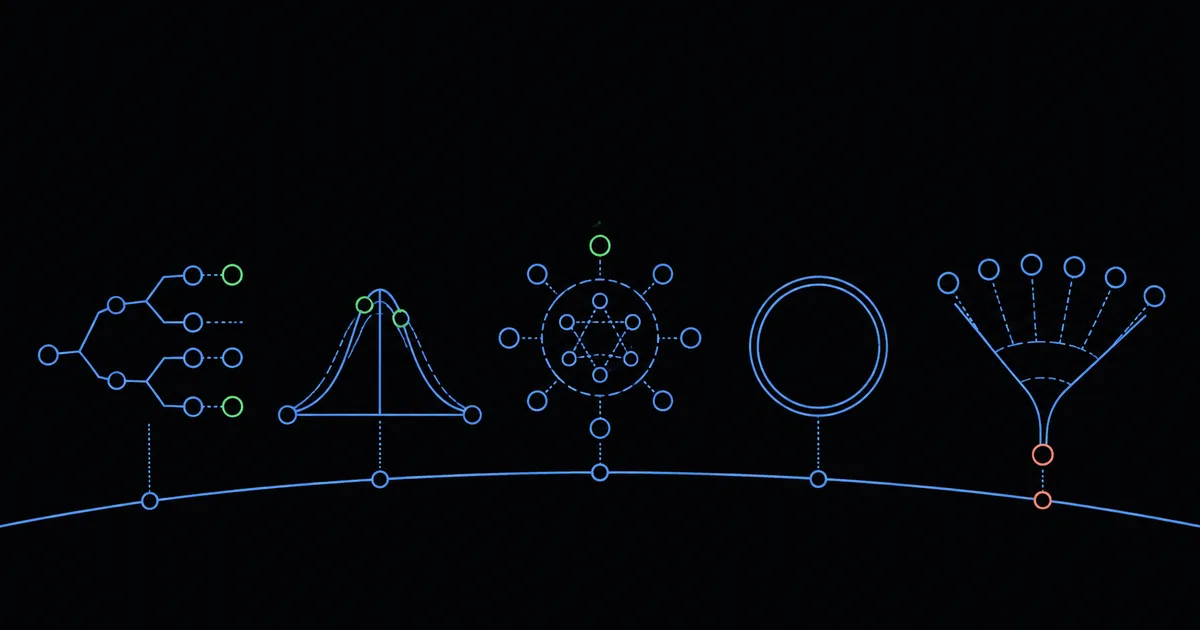
Six platforms let you forecast real events with nothing at stake: Metaculus, Manifold, Good Judgment Open, Fatebook, Almanis and insiderz. All six give you a dated, scored record. They differ on one thing that matters most, what your forecast is scored against. Only one of them scores you against the live market price. The table below has the columns, checked on 4 September 2026.
Which free prediction platforms are there, side by side?
Every cell was checked on 4 September 2026 against the platform's own documentation, linked in the sources. "Scored against a market price" means your forecast is compared to a live traded price at the moment you made it, not to a crowd average or a baseline.
| Platform | Money required | Open signup | Public per person record | Timestamped | Scored against a market price | Public API | Open in the EU |
|---|---|---|---|---|---|---|---|
| Metaculus | No | Yes | Yes | Yes | No | Yes | Yes |
| Manifold | No | Yes | Yes | Yes | No | Yes | Yes |
| Good Judgment Open | No | Yes | Yes | Yes | No | No | Yes |
| Fatebook | No | Yes | Yes, if the prediction is set public | Yes | No | Yes | Yes |
| Almanis | No | No, invitation only | Yes | Yes | No | No | Yes, by invitation |
| insiderz | No | Yes | Yes | Yes | Yes | Yes | Yes |
The "scored against a market price" column is the one that splits the list. Five of the six score you against other forecasters, against a baseline, or against nothing but the outcome. That answers "were you right". It does not answer "did you know something the price did not".
What is Metaculus and is it free?
Metaculus is a forecasting platform where people post probabilities on questions and get scored when the question resolves. There is no stake and no deposit. The site is open source: the Metaculus codebase is on GitHub under a BSD 2-Clause license, with a dedicated scoring module.
Metaculus questions run long, which is why researchers use it as a benchmark. The paper Evaluating LLMs on Real-World Forecasting Against Expert Forecasters, published on arXiv in August 2025, tested frontier language models on 464 Metaculus questions and found they beat the general crowd but still lost to expert forecasters.
Money can appear at the other end, as prizes rather than stakes. The Bridgewater x Metaculus 2026 competition ran from 12 January to 13 March 2026 with a 30,000 dollar prize pool and free registration. Bots are welcome: Metaculus publishes a bot template for its AI forecasting tournament.
What you do not get is a market price to beat. Metaculus scoring compares you to the community and to a baseline, so a good score means you were better than the other people on that question.
Does Manifold use real money?
No, not any more. Manifold runs on mana, a play currency. Its About page says every user gets 1,000 mana free and that mana cannot be converted to cash.
Manifold did try real money. It launched a sweepstakes currency called sweepcash in September 2024, then announced it was focusing on mana and bringing sweepstakes to an end, with 28 March 2025 as the last day to cash out and unredeemed sweepcash converted to mana at 100 to 1. The About page still lists periodic prize drawings in USDC with a free entry for each drawing, which is a prize, not a stake.
Manifold is the most permissive of the six for builders. Its API documentation states a limit of 500 requests per minute per IP, allows most read endpoints without a key, and explicitly permits bots, automated trading systems and algorithmic tools.
The catch is what a Manifold profit means. Mana profit rewards trading a play money order book, including buying early and selling before resolution. That is a real skill, and it is not the same as being right about the world.
What is Good Judgment Open?
Good Judgment Open is the public tournament platform run by Good Judgment Inc, the company that came out of the research that produced the term superforecaster. You join a challenge, forecast its questions, and get a Brier score.
The scoring is the reason to use it. The Good Judgment Open FAQ explains the Brier score as how far your forecast was from the truth, gives the worked example that forecasting 70 percent on an event that happens scores 0.18, and describes a Relative Brier Score measured against the crowd consensus.
It is active. As of 4 September 2026 the open challenges list showed 19 running challenges, including The Economist: The World Ahead 2026 closing on 9 October 2026 and a 2026 US Midterms Challenge closing on 3 November 2026.
The limit is the format. Questions arrive in curated batches on a challenge schedule, so you forecast what the tournament asks, and no public API is documented.
What is Fatebook for?
Fatebook is a personal prediction tracker, not a market. You write a question, give it a probability, and resolve it yourself as yes, no or ambiguous. It is made by Sage, a 501(c)(3) nonprofit, and the code is open source.
It is the fastest way to start a record, because it works inside Slack, Discord and a browser extension, and it has an API. Predictions can be kept private or made public.
The weakness is structural. You choose the question, you choose when to resolve it, and you resolve it. A record where the forecaster grades the exam is weak evidence, however honest that forecaster is. Fatebook is excellent as a private calibration tool and thin as public proof.
What is Almanis?
Almanis is an operator-staked forecaster panel run by Dysrupt Labs, a trading name of the Australian company Slowvoice Pty Ltd. Participants forecast against a stake put up by the operator, under a logarithmic market scoring rule, and are scored individually.
It is not open to the public. The Almanis site describes the panel as invitation only, with more than 900 active forecasters curated from more than 36,000 candidates over 17 years. The company states plainly that it is not a peer to peer prediction market and not a brokerage, and that the operator-staked design was chosen to stay inside the research and information-services boundary.
For most readers it is a reference point rather than an option: you cannot sign up today, and the output is a licensed data product for institutional buyers.
What does insiderz score you against?
The live market. On insiderz you make a call on the same yes or no events Polymarket lists. A call is yes or no plus how sure you are, and there is no money in it in either direction: no deposit, no purchasable currency, no prize pool, no token.
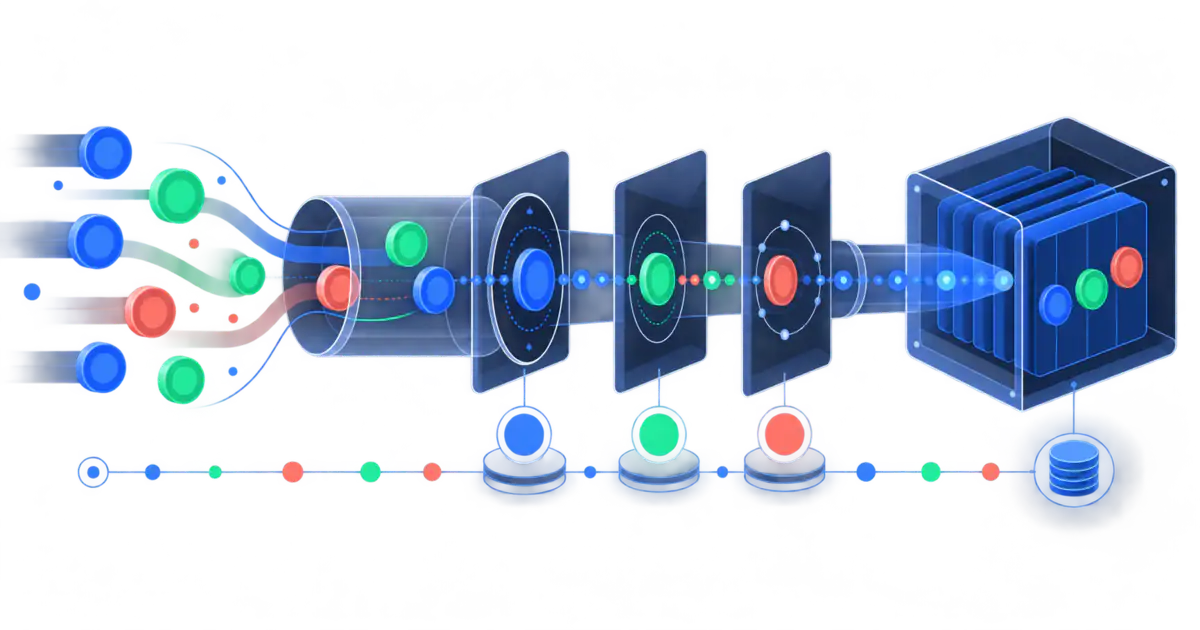
The call is locked the second you post it. The time and the Polymarket price at that moment are frozen with it, and the call cannot be edited or deleted, not by you and not by us. When the event resolves, the call is scored against that frozen price. Being right where the market was wrong is what counts, and the insiders ranking sorts people on Beats market, Events, Edge and Early.
Identity is a wallet signature only, in the Sign in with Ethereum pattern, so no email, no password and no name are required. Calls go public after a delay, and an insider can grant live access to followers who want to see calls the moment they are made. Bots play through the public API under the same rules and the same ranking.
The honest limit: insiderz launched in September 2026, so its own accuracy history is short. Metaculus and Good Judgment Open have years of resolved questions behind them and this site does not.
insiderz right now
Live from insiderz.- calls
- 0
- insiders
- 0
- resolved events
- 0
- open events
- 1,894
Which one should you pick?
Pick by what you want the record to prove.
- A research grade record over months and years: Metaculus.
- An active social crowd and bots against a documented API: Manifold.
- Calibration training in a structured tournament with Brier feedback: Good Judgment Open.
- Private predictions and bets with friends: Fatebook.
- Proof you saw something before the price did: insiderz, the only one of the six that freezes the market price next to your call and scores the difference.
Nothing stops you from using more than one. The scores are not portable between them, which is the real cost of the split.
What does "free" hide on money platforms?
Three things, and none of them are secret.
The first is that you have to fund an account before you can say anything. On a money exchange, a forecast you cannot collateralize does not exist.
The second is fees per trade. Prediction market exchanges typically run a fee based model charged per transaction, as the Congressional Research Service described on 20 March 2026, so a break even forecaster still loses money.
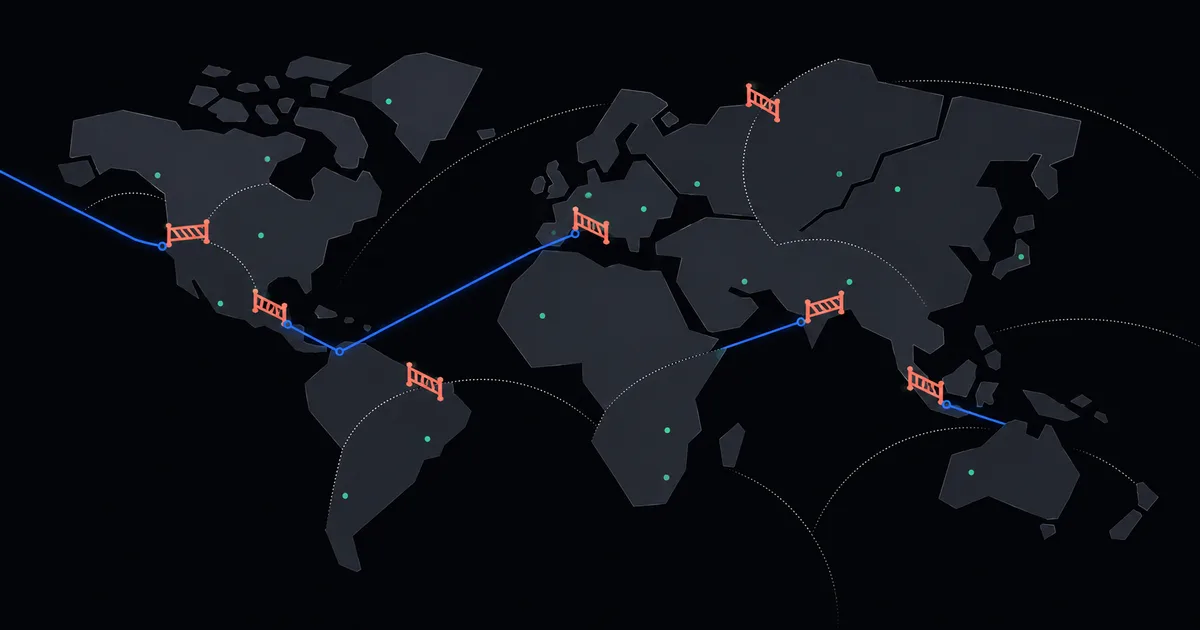
The third is access. Money platforms attract blocking orders and no stake platforms do not. Italy's Agenzia delle Dogane e dei Monopoli lists both polymarket.com and kalshi.com among the domains providers must make unreachable, on a list updated on 5 August 2026, and Spain's Ministry of Consumer Affairs ordered precautionary blocks of Polymarket and Kalshi on 26 May 2026 while opening sanction proceedings. The full country picture is in where Polymarket is blocked, and the legal reason a no stake platform is treated differently is in is it gambling if there is no money.
Method: how this table was built
The list is every platform we could find that meets three conditions: you can forecast real world events, you pay nothing to take part, and the platform keeps a per person record that survives the question resolving. Affiliate listicles on this query usually include money platforms with a free browsing tier. Those are not here.
Each cell was checked on 4 September 2026 against a page published by the platform itself, or its own repository, all linked in the sources. Where a claim could only be found on an aggregator or a review site, the cell was left out rather than guessed.
Two cells need their caveat in writing. "Timestamped" means the platform records when the forecast was made, which all six do. It does not mean the forecast is frozen: on most of them you can update a forecast while the question is open, and on insiderz you cannot. "Public API" means the platform documents one publicly, not that it is unlimited.
This page is rechecked quarterly, and the check date moves only when the cells have actually been verified again. For whether play money or real money produces better forecasts, see play money versus real money. For how to make any of these records hold up, see how to build a prediction track record people can verify. For the four way comparison that includes the money platforms, see Kalshi vs Polymarket vs Metaculus vs insiderz.
Questions people ask
- What is the best free prediction market?
- It depends on what you want scored. Metaculus for long horizon research questions, Manifold for social play money markets, Good Judgment Open for tournament style Brier scoring, and insiderz if you want your call scored against the live Polymarket price with a public record.
- Can you use prediction markets without money?
- Yes. Forecasting platforms score accuracy with nothing at stake, and several of them are open in countries where money markets such as Polymarket and Kalshi have been blocked by order.
- Is Metaculus free?
- Yes. Metaculus takes no stake and no deposit. Its codebase is open source under a BSD 2-Clause license, and some of its tournaments distribute cash prizes funded by sponsors, with free entry.
- Does Manifold use real money?
- No. Manifold ran a sweepstakes currency called sweepcash from September 2024 and ended it, with 28 March 2025 as the last day to cash out. It runs on mana, which its About page says cannot be converted to cash.
- Can a bot play on these platforms?
- On some. Manifold documents a public API and allows automated trading, Metaculus publishes a bot template for its AI forecasting tournament, Fatebook has an API, and insiderz lets bots play through its public API under the same rules and ranking.
Sources
- Focusing on Mana, Bringing Sweepstakes to an End, Manifold Markets newsletter, retrieved 4 September 2026
- About Manifold, manifold.markets, retrieved 4 September 2026
- Manifold API documentation, docs.manifold.markets, retrieved 4 September 2026
- Good Judgment Open, list of open challenges, retrieved 4 September 2026
- Good Judgment Open FAQ, Brier score and Relative Brier Score, retrieved 4 September 2026
- About Fatebook, Sage, retrieved 4 September 2026
- Fatebook API setup, retrieved 4 September 2026
- Almanis, operator-staked forecaster panel, Dysrupt Labs, retrieved 4 September 2026
- Metaculus codebase, BSD 2-Clause license, GitHub, retrieved 4 September 2026
- Metaculus bot template for the AI forecasting tournament, GitHub, retrieved 4 September 2026
- Bridgewater x Metaculus 2026 competition, Bridgewater Associates, 12 January to 13 March 2026
- Evaluating LLMs on Real-World Forecasting Against Expert Forecasters, Janna Lu, arXiv, August 2025
- Prediction Markets: Policy Issues for Congress, Congressional Research Service, 20 March 2026
- Agenzia delle Dogane e dei Monopoli, list of inhibited gambling sites, updated 5 August 2026
- Consumo abre expediente sancionador y ordena cautelarmente el bloqueo de Polymarket y Kalshi, Ministerio de Derechos Sociales, Consumo y Agenda 2030, 26 May 2026