Polymarket blocked in Brazil: what CMN Resolution 5.298 changes
By insiderz6 min read
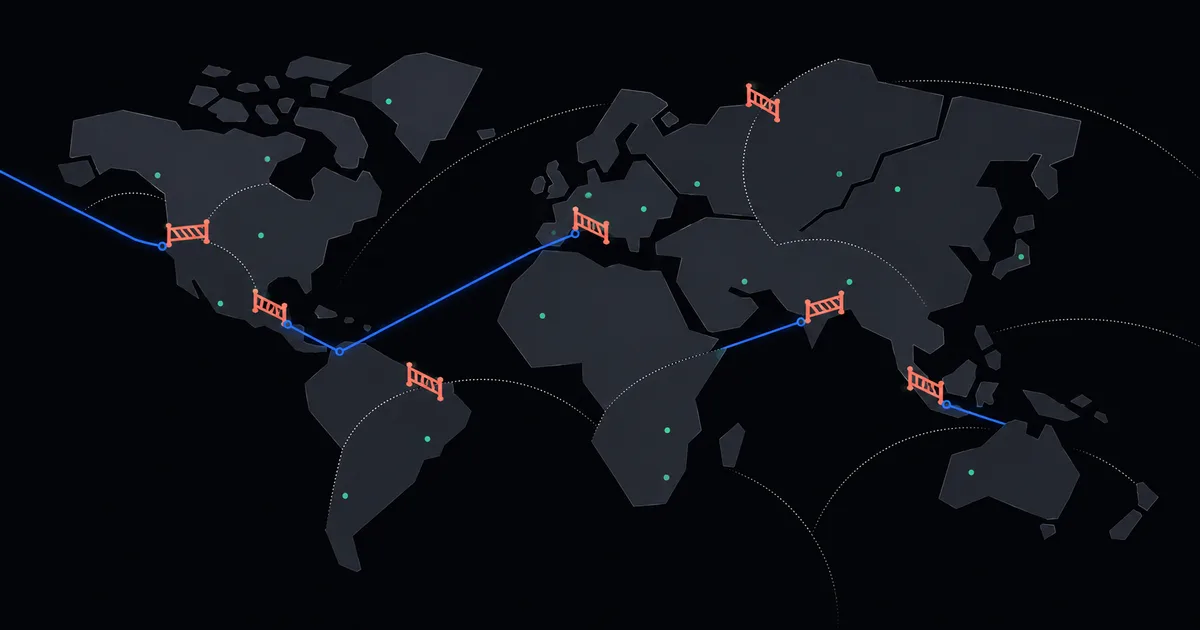
Polymarket is blocked in Brazil. Resolução CMN 5.298, published by the Banco Central do Brasil on 24 April 2026 and in force since 4 May 2026, forbids offering or trading in Brazil any derivative whose underlying is a sports event, an online game event, or a political, electoral, social, cultural or entertainment event. Article 4 extends the ban to derivatives traded abroad but offered inside Brazil.
Last checked: 4 September 2026.
This is not legal advice.
What does Resolução CMN 5.298 actually say?
It is short. Article 1 states that the resolution governs the organisation and functioning of the derivatives market in the country. Article 2 lists principles, including prevention of regulatory arbitrage. Article 3 carries the prohibition and its exceptions. Article 4 extends the prohibition to foreign derivatives offered in Brazil, under rules set by the securities regulator. Article 5 hands execution to the Comissão de Valores Mobiliários. Article 6 sets the entry into force at 4 May 2026.
The table below maps article 3 onto the question people actually ask, which is what can and cannot be offered.
| Underlying of the contract | Derivative may be offered in Brazil | Provision |
|---|---|---|
| Real sports event, as defined by Lei 14.790/2023 | No | art. 3, I |
| Virtual online game event, as defined by Lei 14.790/2023 | No | art. 3, II |
| Political or electoral event | No | art. 3, III |
| Social, cultural or entertainment event that CVM does not treat as an economic reference | No | art. 3, III |
| Interest rates, exchange rates, price indices, securities indices, credit risk measures | Yes | art. 3, sole paragraph, I |
| Commodities, financial assets and securities traded on organised or over the counter markets | Yes | art. 3, sole paragraph, II |
| Other economic or financial references calculated by consistent, verifiable methods | Yes | art. 3, sole paragraph, III |
| Any of the above, traded abroad but offered inside Brazil | Same rules apply | art. 4 |
The legal footing is stated in the preamble: article 9 of Lei 4.595 of 1964 for the Banco Central's power to publish the decision, and articles 3 and 4 of Lei 6.385 of 1976 for the National Monetary Council's competence over the securities market. The resolution was approved in the council session of 23 April 2026 and signed by the president of the Banco Central. You can read the full text on the Banco Central site.
Why did the CMN and the Central Bank act, and not a gambling regulator?
Brazil framed prediction markets as a financial product, not as betting. That is the opposite of what happened in Europe, where the orders against Polymarket came from gambling authorities in Italy, France, Spain, Portugal, Hungary, Belgium and the Netherlands.
The framing follows Brazil's own structure. Fixed odds sports betting was legalised and licensed under Lei 14.790 of 2023, and the resolution borrows that law's definitions for sports and online game events. Anything that looked like a contract paying out on an event, sold to retail investors by a platform with no Brazilian authorisation, sat outside both the betting regime and the derivatives regime. Resolução CMN 5.298 closes that gap by declaring the underlying itself off limits.
Article 2, point IV names the concern directly: prevention of regulatory arbitrage and of speculation harmful to investors and to the public interest.
What happened to access from Brazil?
The platform side moved first. Polymarket began restricting Brazilian users after the Central Bank decision, and Brazilian outlets reported the same change in May 2026. Since then Brazilian coverage has described the site as unavailable from Brazilian connections.
One consequence is worth noting, because it shows what a block does not stop. Brazilian journalism reported in late May 2026 that Polymarket prices kept circulating inside Brazil as quoted numbers, presented on YouTube channels as if they were poll results. Prices are information and they travel. What the resolution removes is the ability to buy and sell the contract from Brazil.
What does a Brazilian user risk?
The prohibition in Resolução CMN 5.298 is addressed to the offer and the trading of the contracts, and article 5 gives the CVM the job of enforcing it. The resolution sets no penalty for an individual who holds a position, and it names no criminal offence.
That is not the same as saying a workaround is safe. Using a VPN to reach a platform that has excluded your country breaks that platform's terms of use, which can mean a closed account and funds you cannot withdraw. It also puts a Brazilian resident into a product that the CVM has been told to keep out of the country, with no Brazilian recourse if something goes wrong. There is no deposit guarantee behind any of it.
What stays legal: forecasting with no money
Resolução CMN 5.298 regulates derivative contracts. A derivative needs a payoff: value moves from one party to another when the event resolves. Take the payoff away and there is no contract to prohibit. Take the stake away and there is no bet under Lei 14.790 either.
So from Brazil you can still read prices as information, take part in forecasting competitions with no cash prize, and publish a dated prediction that anyone can check when the event resolves. The last of those is the one worth doing before an election rather than after it, because a prediction is only evidence if it was published while the outcome was still unknown.
The 2026 election: putting a prediction on the record before 4 October
Brazil votes in the first round on Sunday 4 October 2026, with a second round on Sunday 25 October 2026 where no candidate reaches the required majority, according to the electoral calendar. Voters choose the president, state governors, two senators per state and federal and state deputies.
That is a hard deadline, and it is what makes a timestamp valuable. Anyone can say afterwards that they saw the result coming. A call posted on 20 September and locked at that moment is a different object from a claim made on 5 October.
insiderz exists for that. It lists the same yes or no events as Polymarket and takes no money at all. You post a call: yes or no, plus how sure you are. The call is locked the second it is posted, with the time and the Polymarket price at that moment frozen into it, and it cannot be edited or deleted. When the event resolves, the call is scored against that price, so being right where the market was wrong is what counts.
The public ranking of insiders shows four columns: Beats market, Events, Edge and Early. Calls go public after a delay, and followers with live access see them the moment they are made. Identity is a wallet signature, so no email and no name are required, and bots can play through the public API under the same rules.
Browse the open events, the calls and the insiders without an account.
Where to check the current status
The resolution is the primary document and it is short enough to read in five minutes. The Banco Central publishes it at exibenormativo, with the text and the date of entry into force. Complementary rules and enforcement come from the CVM under article 5, so the CVM newsroom is where any change will appear first.
For how Brazil compares with the European orders, see where Polymarket is blocked, country by country. For the underlying legal question, see is it gambling if there is no money. For the election itself, see Brazil's 2026 election in prediction markets.
Questions people ask
- Is Polymarket banned in Brazil?
- Access has been blocked since Resolução CMN 5.298 took effect on 4 May 2026. The resolution forbids offering or trading derivatives whose underlying is a sports, political, electoral, social, cultural or entertainment event, and it applies to foreign derivatives offered inside Brazil.
- Which regulator banned prediction markets in Brazil?
- The Conselho Monetário Nacional, with the resolution published by the Banco Central do Brasil on 24 April 2026. Enforcement and complementary rules fall to the Comissão de Valores Mobiliários under article 5 of the same resolution.
- Is there a legal alternative to Polymarket in Brazil?
- Yes. Resolução CMN 5.298 regulates derivative contracts, which require a payoff. A platform where you post a public prediction with no stake, no payout and no prize is not a derivative and is not a bet, so it falls outside both frameworks.
- Can I legally forecast the 2026 election in Brazil?
- Yes, as long as no money is at stake. Publishing a dated public prediction about the first round on 4 October 2026 is not a derivative contract and not a wager. Trading an electoral contract for money is what the resolution prohibits.
- Which derivatives are still allowed in Brazil?
- Those with an economic or financial underlying: interest rates, exchange rates, price and securities indices, credit risk measures, commodities and securities traded on organised markets, plus other verifiable economic references, under the sole paragraph of article 3.
Sources
- Banco Central do Brasil, Resolução CMN n. 5.298 de 24 de abril de 2026
- Bocater, CMN edita norma para disciplinar os mercados de previsão, 2026
- Exame, Polymarket começa a banir brasileiros da plataforma, May 2026
- Cointelegraph Brasil, Polymarket começa a banir brasileiros após determinação do Banco Central, May 2026
- Núcleo Jornalismo, Proibido no Brasil, Polymarket virou instituto de pesquisa para canais de direita no YouTube, 29 May 2026
- Câmara Legislativa do Distrito Federal, Eleições 2026: cronograma completo de prazos e votações
- Ministerio de Derechos Sociales, Consumo y Agenda 2030, Spain opens sanctioning proceedings and orders the blocking of Polymarket and Kalshi, 26 May 2026