Deleted predictions: why crypto track records are fiction
By insiderz8 min read
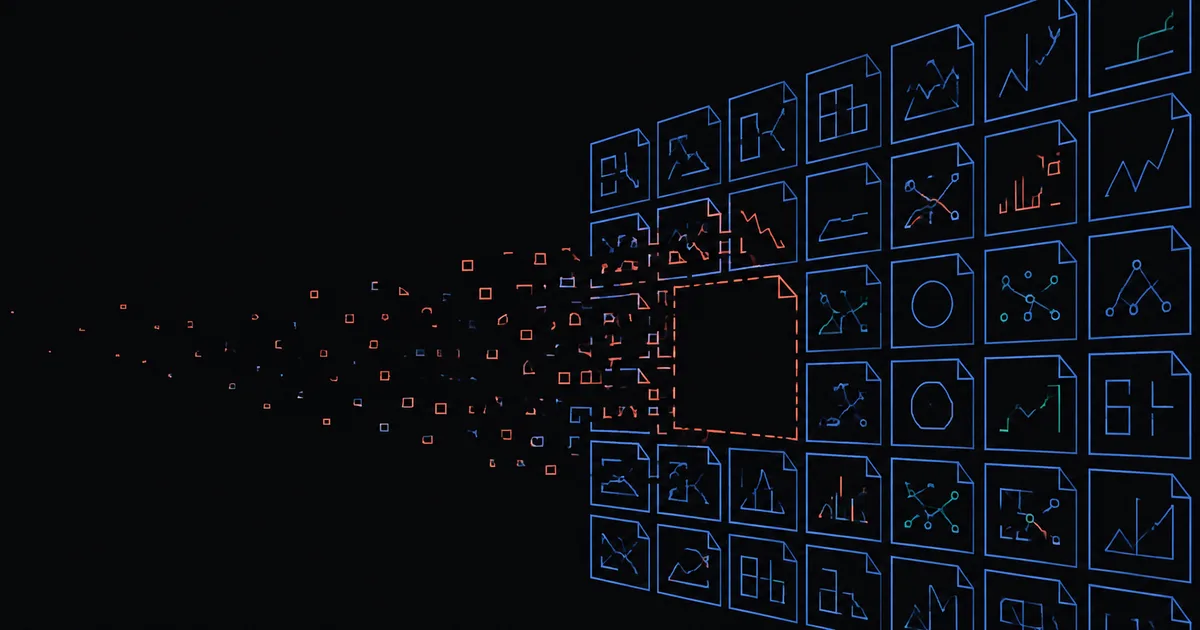
A track record assembled from social media posts measures what survived, not what was said. Posts can be deleted, edited or quietly reframed, and nothing marks the gap afterwards. Pew Research Center found 18% of tweets vanish from public view within three months. Since losing calls are the ones most likely to disappear, the visible set always flatters the author.
How do predictions actually disappear?
There are three mechanisms and they are all boring. The first is deletion: the post is removed and the timeline closes over it. The second is reframing: the call is not deleted but recast later as a joke, a scenario, or a longer time horizon that has not expired yet. The third is the handle change, where an account is renamed or restarted and the old posts stop being findable under the name people search for.
None of these require dishonesty in any legal sense, and none of them break a platform rule. That is the point. The infrastructure for keeping predictions is the same infrastructure for removing them, and it is controlled entirely by the person being evaluated.
Deletion is also normal rather than exceptional. Pew Research Center tracked nearly 5 million tweets posted between March and April 2023 and monitored them until 15 June 2023, finding that 18% were no longer publicly visible by the end of that window. In 60% of those cases the account had been made private, suspended or deleted; in the other 40% the account still existed and the individual post had been removed. Half of the posts that eventually disappeared did so within six days.
Web archives do not solve this. The same Pew study found that 38% of webpages that existed in 2013 were no longer accessible in 2024. Reconstructing what someone said three years ago is a research project with an uncertain result, which is exactly why the claim "I called it" is so cheap to make.
Why does survivorship bias make anyone look prescient?
Survivorship bias is judging a population by the members that are still visible. Applied to predictions it works like this: a person makes forty calls, twenty-five miss, they delete or stop mentioning the twenty-five, and a reader arriving later sees fifteen hits and no misses. The reader is not being lied to about any individual call. Every surviving call is genuine. The population is the lie.
The effect is strong enough that it does not need bad intent. Ordinary memory does the same job. People remember and repeat the calls that worked, link to them, and pin them. The misses are not deleted so much as never mentioned again, which for a reader is the same thing.
CXO Advisory Group ran the version of this experiment where nobody gets to choose. Between 2005 and 2012 it collected and graded 6,582 public US stock market forecasts from 68 named experts, scoring every call rather than the memorable ones, and reported terminal accuracy of 46.9%, or 47.4% averaged per guru. Judged on all of their calls, a group of prominent forecasters landed slightly below a coin flip. Judged on their own selections, the same people look like seers.
How many correct calls does it take before a streak means anything?
Fewer than you would guess for a fluke and more than most people show. Assume even odds and a person calling coin flips with no skill at all.
- Five correct in a row happens by chance about once in 32 attempts.
- Ten correct in a row happens about once in 1,024 attempts.
- Twelve correct in a row happens about once in 4,096 attempts.
- Ten or more correct out of twelve happens about once in 52 attempts.
- Twenty or more correct out of thirty happens about once in 20 attempts.
Now put that against the size of the crowd. If a hundred thousand people post calls in a given season, roughly a hundred of them will produce a ten in a row streak with no ability whatsoever, and every one of those hundred will have a very good thread about it. The streak is not evidence. The streak is what a large sample guarantees.
This is why the denominator carries all the weight. Ten hits out of ten resolved calls is a real signal. Ten hits with the denominator hidden is not a weaker version of that signal, it is no signal, because the same visible evidence is produced by skill and by a large enough crowd of guessers. See how to build a prediction track record people can verify for the four properties that close the gap.
What is "I called it" worth without the denominator?
It is worth what a lottery ticket stub is worth as evidence of a system. Even a systematic, funded, fully public attempt to profit from one pundit's reputation needs a real denominator, and finds out how hard the problem is.
The Inverse Cramer Tracker ETF is the cleanest example on record because it was forced to report every position. Tuttle Capital Management launched it in March 2023 to take the opposite side of Jim Cramer's televised stock picks, and its manager stated plainly in the closure announcement that "We started the Fund in order to point out the danger of following TV stockpickers, Jim Cramer specifically". The board authorized liquidation on 25 January 2024, the last trading day was 13 February 2024, and the fund was liquidated on 23 February 2024. Cointelegraph reported that over its roughly ten months the fund was down about 15% and had attracted only $2.4 million.
Read that carefully, because it cuts both ways. "Always wrong" is a claim about a denominator too, and it failed the same test that "always right" fails. Neither reputation survived contact with a complete, scored record.
Which cases are actually documented?
Public claims about individual influencers are usually unverifiable by design, which is the problem this article is about. What follows are cases where a primary source states on the record what happened, checked on 4 September 2026.
| Case | Date | What the primary source states | Source |
|---|---|---|---|
| Cointelegraph posts and removes a false spot Bitcoin ETF approval | 16 October 2023 | Post published at 13:24:16 UTC, removed after contact with BlackRock and Bloomberg at 14:03:42 UTC, publisher's own post-mortem published the same day | Cointelegraph |
| SEC charges eight social media influencers | 14 December 2022 | Seven promoted stocks to followers by posting price targets, then sold into the resulting buying without disclosing it, per the SEC complaint; alleged gains over $100 million | SEC |
| Inverse Cramer Tracker ETF liquidated | 25 January 2024 announced, 23 February 2024 liquidated | Fund created to fade one pundit's picks closed after about ten months | Tuttle Capital |
| FCA week of action on illegal finfluencers | Week starting 20 April 2026 | 1,267 illegal financial adverts identified, 120 account takedown requests to platforms, 34 new warning alerts, criminal proceedings against three individuals | FCA |
| Pew study of tweet disappearance | 17 May 2024 | 18% of nearly 5 million sampled tweets no longer publicly visible within three months | Pew Research Center |
| CXO Advisory Guru Grades | Forecasts from 2005 to 2012 | 6,582 graded forecasts from 68 named experts, 46.9% terminal accuracy | CXO Advisory |
Two things stand out. Where a regulator or a fund is involved, the record is complete and dated, and the numbers are unflattering. Where the record is a social media account, there is no record at all, only what is currently displayed.
The FCA figures are worth a second look for a different reason. When a regulator asks a platform to take down 120 accounts, those accounts and everything they ever posted stop being visible at once. Enforcement and deletion produce the same outcome for anyone trying to audit a track record afterwards: the calls are gone.
What actually fixes it?
Nothing that depends on the author's cooperation. Archives are partial, screenshots prove nothing, and a promise to keep your losses up is a promise. The fix has to be structural: the record has to be written somewhere the author cannot reach.
That means a call is locked the moment it is made, with the time recorded by someone other than the person making it, and it stays locked whether it wins or loses. It means the record shows every call, so the denominator is visible without anyone having to trust a claim about it. And it means each call is scored against a public benchmark at the moment it was made, so that agreeing with the obvious counts for less than being right where the benchmark was wrong. For the mechanics of the timestamp itself, see every way to timestamp a prediction, compared.
This is what insiderz does and the whole of what it does. Calls are locked with the time and the Polymarket price at that moment, they cannot be edited or deleted by you or by us, and they are scored against that price when the event resolves. No money is involved. The leaderboard ranks people on how often they beat the market, by how much, and how early, and every call sits in a public record that only grows. A profit ranking answers a completely different question, which is the subject of P&L is not skill.
Questions people ask
- Why do crypto influencers delete predictions?
- Because a visible record of failed calls damages the appearance of expertise, and no platform rule stops them. Deletion on social media is silent: nothing marks the gap, so readers see only what survived.
- What is survivorship bias in predictions?
- Judging someone by the calls that are still visible rather than by every call they made. Since losing calls are the ones most likely to be removed, the surviving set looks far more accurate than the person is.
- How many correct calls prove skill?
- On roughly even odds, about a dozen resolved calls scored against a benchmark is where a good run stops being explainable by luck. Ten correct in a row happens by chance about once in 1,024 attempts.
- Is a screenshot of an old post proof?
- No. A screenshot has no independent timestamp, can be staged, and shows one call rather than all of them. It answers none of the three questions that matter: when, unedited, and what else did you say.
- Do the deleted calls still exist somewhere?
- Sometimes, in web archives, but coverage is partial. Pew Research Center found 38% of webpages that existed in 2013 were no longer accessible by 2024, so relying on archives to reconstruct a record is unreliable.
Sources
- Clarification on sharing false spot Bitcoin ETF news, Cointelegraph, 16 October 2023
- SEC Charges Eight Social Media Influencers in $100 Million Stock Manipulation Scheme Promoted on Discord and Twitter, US Securities and Exchange Commission, 14 December 2022
- The Inverse Cramer Tracker ETF to be Closed and Liquidated, Tuttle Capital Management press release, 25 January 2024
- Jim Cramer isn't always wrong: Inverse Cramer ETF shuts down, Cointelegraph, 29 January 2024
- FCA spearheads global action to stop illegal finfluencers, Financial Conduct Authority, 24 April 2026
- Link Rot and Digital Decay on Government, News and Other Webpages, Pew Research Center, 17 May 2024
- Guru Grades, CXO Advisory Group, forecasts collected 2005 to 2012