Every way to timestamp a prediction, compared
By insiderz7 min read

There are six practical ways to timestamp a prediction: a screenshot, a public post, a published hash you reveal later, an OpenTimestamps proof anchored to Bitcoin, an on chain transaction, or a scored forecasting platform. They differ on one axis that matters more than cost or difficulty: whether the proof survives you wanting it gone, and whether it shows the predictions you would rather forget.
Which method should you use?
The table compares all six, checked on 4 September 2026. Read the last two columns first, because that is where the methods actually separate.
| Method | Cost | Timestamp created by someone other than you | Works for any statement you write | Scored automatically when the event resolves | Shows every prediction you made |
|---|---|---|---|---|---|
| Screenshot | Free | No | Yes | No | No |
| Public post on X or Telegram | Free | Yes | Yes | No | No |
| Published hash, revealed later | Free | Yes | Yes | No | No |
| OpenTimestamps proof | Free | Yes | Yes | No | No |
| On chain transaction | Network fee | Yes | Yes | No | No |
| Metaculus | Free | Yes | No | Yes | Yes |
| Manifold | Free, play money | Yes | Yes | Yes | Yes |
| insiderz | Free | Yes | No | Yes | Yes |
What does a timestamp prove, and what does it not?
A timestamp proves one thing: a specific text existed before a specific moment. Peter Todd's original description of OpenTimestamps puts it in one line, that "a timestamp proves that a message existed prior to some point in time". That is the whole guarantee.
It does not prove the text is true, that you believed it, that you wrote it, or that it was your only prediction. Above all it does not prove anything about frequency. A perfect cryptographic timestamp on one correct call tells a reader that you said it early. It tells them nothing about how many calls you made that year, which is the number they actually need.
Method 1: post it publicly
Write the prediction in a public post and let the platform record the time. Cost nothing, takes seconds, and the timestamp comes from a third party rather than from you.
The weakness is deletion. Pew Research Center sampled nearly 5 million tweets from March and April 2023 and found 18% were no longer publicly visible three months later, with 40% of those removed by the author while the account stayed active. Nothing in a timeline indicates that a post used to be there. A public post is an excellent timestamp and a worthless record, because the same button that published it can unpublish it.
Method 2: publish a hash, reveal later
Write the prediction in a file, hash it, publish the hash somewhere public, and reveal the file after the event. Anyone can rehash your file and confirm it matches the hash you published earlier. This lets you prove a call without disclosing it at the time, which is genuinely useful if you do not want to move the thing you are predicting.
The flaw is not cryptographic, it is arithmetical. Nothing stops you publishing ten hashes covering ten different outcomes and revealing only the one that came true. Every verification still passes. A commitment scheme proves you knew a text; it cannot prove you did not know nine others. Unless the commitments are numbered and all revealed, a hash proves priority and hides the denominator, which is the same trade a screenshot makes with better mathematics.
Method 3: OpenTimestamps and Bitcoin anchoring
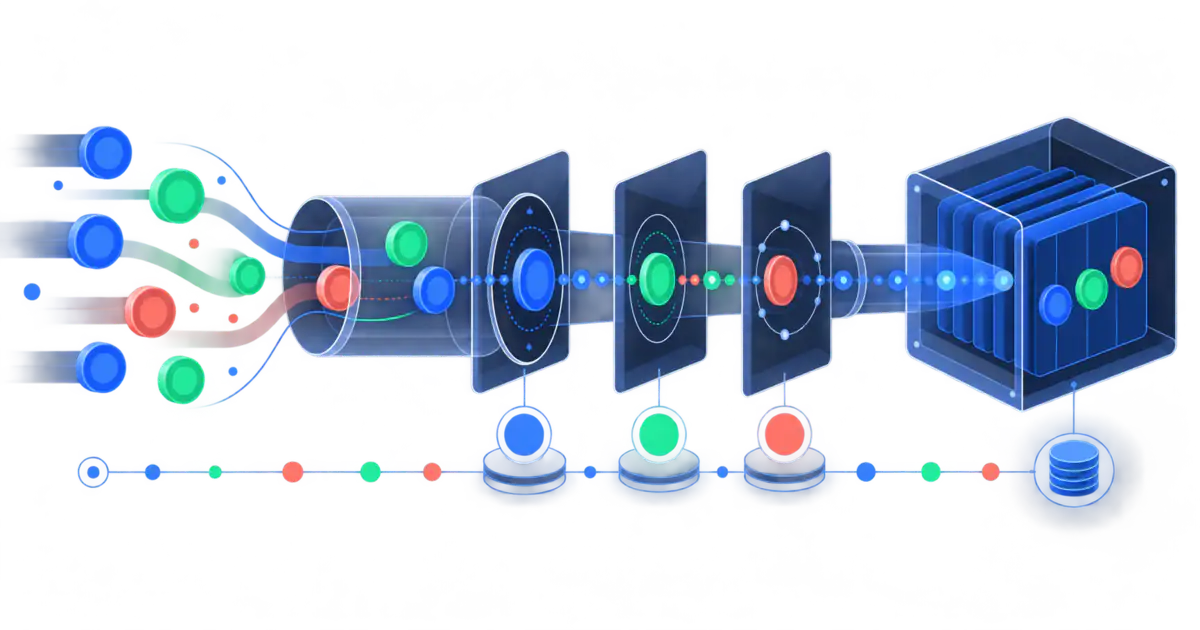
OpenTimestamps is a standard format for blockchain timestamping. You run ots stamp on a file, free calendar servers batch your hash with many others into a merkle tree, and one Bitcoin transaction anchors the lot. Later ots upgrade fetches the path to the blockchain and ots verify checks it against a Bitcoin block, printing the block that attests the file existed by that date.
Two practical details. First, the cost to you is zero: the calendars pay the transaction fee and, as the announcement explains, an unlimited number of timestamps can share one transaction through merkle aggregation. Second, it is not instant. The client README states that "it takes a few hours for the timestamp to get confirmed by the Bitcoin blockchain", because there is not one transaction per timestamp.
OpenTimestamps is the strongest available answer to "when did you write this". It is not an answer to "what else did you write", because you still choose which .ots files to show anyone.
Method 4: an on chain transaction
Write the prediction, or its hash, into a transaction on a public blockchain and pay the fee yourself. You get a block height, a public record nobody can remove, and no dependency on a calendar server.
Compared to OpenTimestamps you pay a fee per prediction and gain very little: both end up as an immutable record with a block timestamp. Its one advantage is that the content can be written in the clear, so the prediction is public at the moment it is made rather than at the moment you decide to reveal it. Its disadvantage is that it is still a pile of unconnected proofs, so anybody auditing you has to find them all, and they can only find the ones you point at.
Method 5: a scored platform
The last method is different in kind. On a forecasting platform you do not produce a proof, you join a record that already has your name on it, and the platform scores the outcome for you.
Metaculus, launched in 2015, is reputation based: users forecast listed questions, earn or lose points according to accuracy, and the resulting public data is complete enough that researchers use it as a benchmark. A 2025 evaluation compared frontier language models against top human forecasters across 464 resolved Metaculus questions. That study is possible only because the individual records are public, scored and not editable after the fact.
Manifold runs on play money called mana, which the documentation states "cannot be converted to cash", with every user starting at M1000. Anyone can create a market, so unlike Metaculus it covers arbitrary statements, and profiles carry a public history plus a site wide calibration page.
insiderz sits in the same family with a different scoring rule. A call is locked the second it is posted, with the time and the Polymarket price at that moment frozen with it. It cannot be edited or deleted, by you or by us. When the event resolves, the call is scored against that price, so being right where the market was wrong counts and agreeing with an obvious favorite does not. Calls go public after a delay, and followers with live access see them the moment they are made. Nothing is staked, because there is no money on the platform at all.
The part everyone forgets: the denominator
Five of the six methods above answer the question "when". Only the sixth answers the question "how often", and "how often" is the one that separates a forecaster from a person with a good memory.
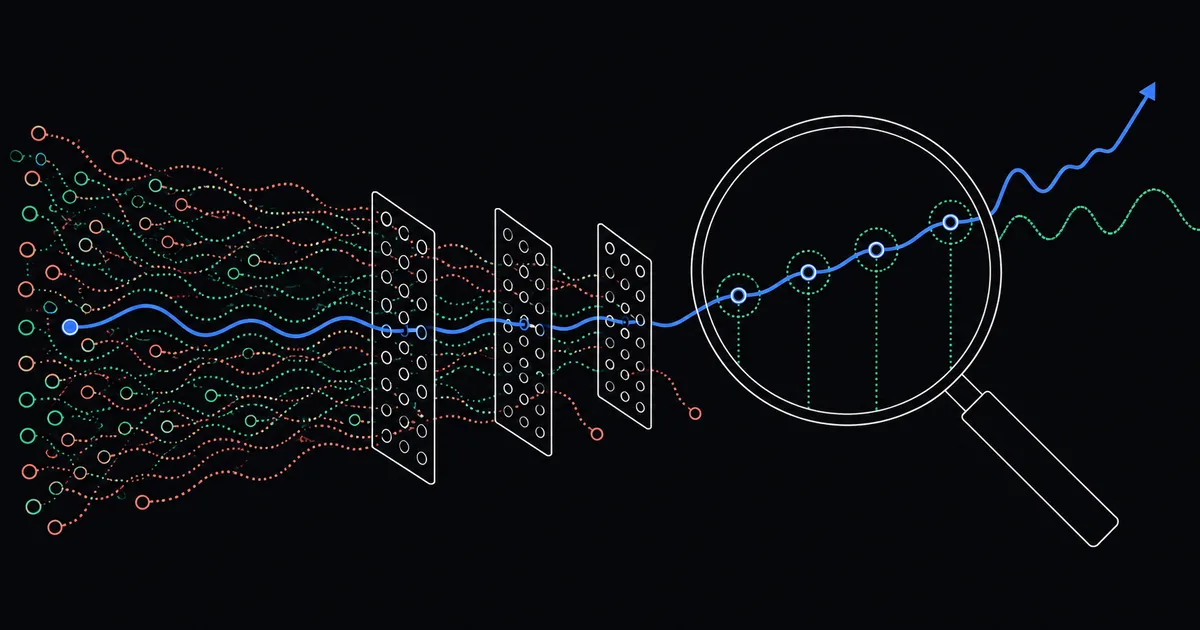
The reason is easy to see with numbers. Ten correct calls in a row happens by chance about once in 1,024 attempts at even odds. In a crowd of a hundred thousand people posting calls, roughly a hundred will produce that run with no skill at all, and each of them can timestamp every single one perfectly. Cryptography cannot fix this. Only a complete record can, because completeness is what turns a numerator into a rate.
So the practical answer is layered. If you want to prove priority on one specific claim without publishing it, use OpenTimestamps: it is free, standard and verifiable by anyone with a Bitcoin node. If you want a record people can actually evaluate, use a platform where the losses are recorded next to the wins and scored automatically. See how to build a prediction track record people can verify for the four properties a record needs, and deleted predictions for what happens to the ones that are missing.
Method: how this comparison was made
Options were chosen to cover every timestamping approach a non technical person can actually use, plus the two forecasting platforms most often named alongside them. Cells describe documented behavior only: cost and confirmation delay for OpenTimestamps come from the project's own README and announcement, Manifold's play money status from its documentation, Metaculus's scoring model from its Wikipedia entry and from published research using its resolved questions, and post deletion rates from the Pew Research Center sample. Cells that could not be established from an accessible primary source were left out rather than guessed. Last checked 4 September 2026. If you want to see the scored version in practice, the events list and the leaderboard are open without an account.
Questions people ask
- How do I prove I predicted something before it happened?
- Publish it somewhere you cannot edit, with a timestamp created by a third party, and keep the failed predictions visible too. The timestamp answers when. Only a complete record answers how often.
- Does a hash commitment prove a prediction?
- It proves you knew a specific text at a specific time. It does not prove you made only one commitment. Publish ten hashes, reveal the one that came true, and every proof still verifies.
- Is a tweet enough proof?
- No. The platform timestamp is real, but the post can be deleted at any time and nothing marks the gap, and a reader cannot see the other predictions you made and removed.
- Does OpenTimestamps cost anything?
- No. Calendar servers batch many timestamps into a single Bitcoin transaction and pay the fee, so users pay nothing. Confirmation in the Bitcoin blockchain takes a few hours.
- What is the difference between a timestamp and a track record?
- A timestamp covers one statement. A track record covers all of them. A timestamp proves you said it first, a record proves how often you were right, and only the second one is evidence of skill.
Sources
- OpenTimestamps: Scalable, Trust-Minimized, Distributed Timestamping with Bitcoin, Peter Todd, 15 September 2016
- OpenTimestamps, project homepage, accessed 4 September 2026
- opentimestamps-client README, OpenTimestamps project on GitHub, accessed 4 September 2026
- Link Rot and Digital Decay on Government, News and Other Webpages, Pew Research Center, 17 May 2024
- Manifold FAQ, Manifold Markets documentation, accessed 4 September 2026
- Metaculus, Wikipedia, accessed 4 September 2026
- Evaluating LLMs on Real-World Forecasting Against Expert Forecasters, Janna Lu, arXiv, July 2025