Play money vs real money: does money help forecasts?
By insiderz6 min read
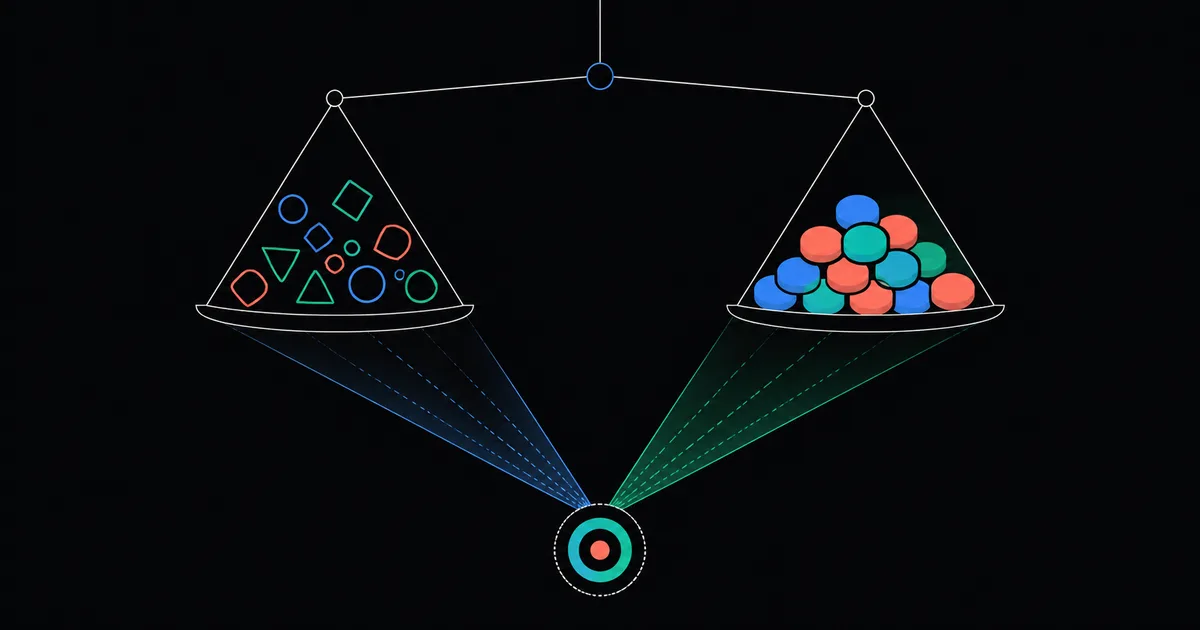
Money does not appear to buy accuracy. The head to head test that settled the question ran a real money exchange against a play money exchange across 208 NFL games in 2003 and found no statistically significant difference on four separate scoring rules. Cross platform Brier scores measured to October 2025 put the money and no money platforms in the same band. What money reliably buys is attention, liquidity and a way for large holders to push a price.
Which platforms score better, money or no money?
| Platform | Real money at stake | Public per person record | Overall Brier score | Markets in sample | Data as of |
|---|---|---|---|---|---|
| Polymarket | Yes | No | 0.1652 | 259 | 14 October 2025 |
| Metaculus | No | Yes | 0.1664 | 153 | 14 October 2025 |
| Kalshi | Yes | No | 0.1982 | 183 | 14 October 2025 |
| Manifold | No | Yes | 0.2118 | 376 | 14 October 2025 |
| insiderz | No | Yes | No resolved record yet | 0 | 4 September 2026 |
Scores from brier.fyi, where lower is better and 0.25 is what you score by saying 50 percent to everything. The samples are small, they are not matched question for question, and the four platforms list different questions, so this is evidence about a band, not a ranking. The band contains both categories. insiderz launched in September 2026 and has no resolved record, so its row says so rather than guessing.
What did the original research find?
The direct experiment is still the cleanest one. Servan-Schreiber, Wolfers, Pennock and Galebach ran TradeSports, a real money exchange, against NewsFutures, a play money exchange, on the same American football games from 4 September to 8 December 2003, sampling the last trade before noon on game day for 208 NFL games.
The results were close to indistinguishable. Favorites won 65.9 percent of the time on TradeSports, whose average pre game price for the favorite was 65.1, and 66.8 percent on NewsFutures, whose average was 65.6. Root mean squared error was 0.468 for the real money market and 0.467 for the play money one. Across mean absolute error, root mean squared error, quadratic score and logarithmic score, the paper reports that the small advantage to the play money market "in no case comes close to being statistically significant" (Electronic Markets 14(3), 2004).
Both markets beat the average of 1,947 individual human forecasters entered in the same contest, and the gap between the markets and that average was larger than the gap between the two markets.
The authors offered an explanation worth keeping: real money may better motivate information discovery, while play money may yield more efficient information aggregation. Two forces, opposite signs, roughly cancelling.
Why does money help?
Three real advantages, none of them about calibration.
- Attention. Being wrong costs something, so people check before they act. That is the strongest argument for stakes and it is the one the 2004 paper conceded up front.
- Liquidity. Money attracts market makers, and market makers keep the price continuous and the spread tight, which makes the number readable at any moment.
- Coverage. Volume pays for question creation. Combined Polymarket and Kalshi volume reached 45.33 billion dollars in August 2026, of which 8.16 billion was Polymarket (Yahoo Finance, 2 September 2026), which is why almost any newsworthy question now has a market attached.
Why does money hurt?
Money weights opinions by wallet, not by track record. That has three visible consequences.
Prices can be moved by very few people. Reporting on the October 2024 surge in Trump's Polymarket odds attributed it largely to about 1 percent of Polymarket's users (Fortune, 5 November 2024). The price still turned out to point at the winner, but a number that a handful of accounts can set is not a crowd's belief in the way the phrase suggests.
Prices across venues do not agree. In the final five weeks of the 2024 US campaign, across more than 2,500 markets on four exchanges, prices for identical contracts diverged and arbitrage opportunities persisted into the final two weeks (Clinton and Huang, SocArXiv, 2025). Real money did not eliminate the mispricing.
And money can reach the resolution layer, not just the price. In March 2025 a Polymarket market on whether Ukraine would agree to a minerals deal, carrying over 7 million dollars, was resolved to yes when no such agreement had been reached. The outcome was traced to a holder of roughly 5 million UMA governance tokens across three accounts, about 25 percent of the votes cast. Polymarket declined refunds, saying it was not a market failure (The Defiant, March 2025). More cases are in how prediction markets resolve.
Is reputation a real stake?
It is, and it is a differently shaped one. A wallet balance is private, fungible and recoverable. A public record of what you said and when is none of those things. You cannot top it up after a bad run, and you cannot separate it from your name.
It also has a property money lacks: it accumulates as evidence. A trader's profit tells you they made money, not whether their probabilities were good. A scored record of probabilities against outcomes tells you exactly how good they were, and lets someone else check.
The measured ceiling for individual skill comes from tournaments with no money at stake. On the ForecastBench human question set, superforecasters reached a mean Brier score of 0.096, against 0.121 for the general public and 0.122 for the best model tested, with both gaps significant at p below 0.001 (Karger et al., arXiv:2409.19839, revised February 2025). Nobody was paid per correct forecast to produce that.
What is at stake on insiderz?
Your name and nothing else. There is no money on insiderz, no prizes and no tokens.
A call is a yes or a no on one of the same events Polymarket lists, plus how sure you are. The moment you post it, it is locked: the time and the Polymarket price for that event at that instant are frozen with it, and the call cannot be edited or deleted. When the event resolves, the call is scored against the price it was locked at, so agreeing with a heavy favorite earns almost nothing and being right where the price was wrong is what counts.
Identity is a wallet signature. No email, no name. Calls go public after a delay, and followers can ask an insider for live access to see them the moment they are made. The leaderboard ranks people on Beats market, Events, Edge and Early, and bots can play through the public API under the same rules.
Where does money still win?
Three places, clearly.
- Speed on breaking news. A price with money behind it re-rates in seconds. A crowd of unpaid forecasters re-rates when they next log in.
- Continuous quoting. Money buys market makers, so a money market always has a number. A forecasting platform has a number only when someone posts one.
- Depth on the biggest questions. The flagship markets are where the liquidity concentrates, and depth is what made the 2024 presidential market hard to push around.
None of those are accuracy advantages. They are availability advantages, and they are the reason the market price is a good benchmark even for people who never intend to trade. Further reading: are prediction markets accurate and how to build a prediction track record people can verify.
Questions people ask
- Are play money prediction markets accurate?
- Yes. The classic head to head test over 208 NFL games found play money matched real money on four scoring rules, with no statistically significant difference.
- Why would anyone forecast with no money at stake?
- Reputation. A public, permanent, scored record is a stake, and for many people it is more useful than a wallet balance.
- Is Metaculus better than Polymarket?
- On the brier.fyi cross platform sample measured to 14 October 2025 they were almost identical, 0.1664 for Metaculus and 0.1652 for Polymarket, on small and unmatched samples.
- Does money make people research harder?
- It is the strongest argument for money, and the original 2004 study said so explicitly, while also finding no measurable accuracy advantage in practice.
Sources
- Prediction Markets: Does Money Matter?, Servan-Schreiber, Wolfers, Pennock and Galebach, Electronic Markets 14(3), 2004
- Prediction market accuracy by platform, brier.fyi, data updated 14 October 2025
- ForecastBench: A Dynamic Benchmark of AI Forecasting Capabilities, Karger et al., arXiv:2409.19839, revised 28 February 2025
- Polymarket users have wagered $3.2 billion on the outcome of the election, Fortune, 5 November 2024
- Prediction Markets? The Accuracy and Efficiency of $2.4 Billion in the 2024 Presidential Election, Joshua D. Clinton and TzuFeng Huang, SocArXiv, 2025
- Trading Volumes On Kalshi And Polymarket Fell 15% In August, Yahoo Finance, 2 September 2026
- Polymarket's $7M Ukraine Mineral Deal Debacle Traced to Oracle Whale, The Defiant, March 2025