Prediction markets: how a price becomes a probability
By insiderz7 min read
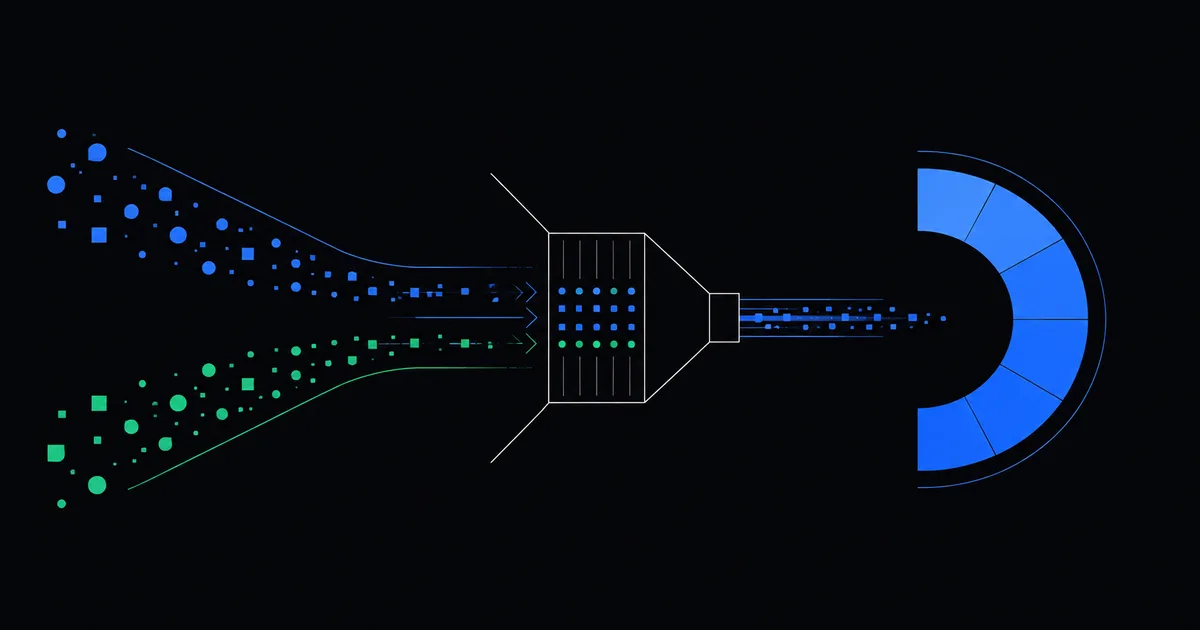
A prediction market is a market where people trade contracts that pay 1 if an event happens and 0 if it does not. The last traded price sits between 0 and 1, so a contract at 34 cents reads as a 34 percent chance. The price is a claim about the future made by everyone trading at once. Like any claim, it can be beaten.
What is a prediction market, in one paragraph?
A prediction market lists a question with a written rule for deciding the answer, then lets people buy and sell two opposite contracts on it. The yes contract pays 1 if the event happens. The no contract pays 1 if it does not. Because the pair always settles at exactly 1, the price of yes and the price of no have to add up to about 1 at all times. That is the whole mechanism. Everything else is plumbing.
The question is not "who do you want to win". The question is "at what price would you take this side". That difference is why a market price behaves differently from a poll or an opinion.
Why does 34 cents mean 34 percent?
A contract that pays 1 dollar if an event happens is worth its probability, times one dollar, to someone who is indifferent about risk. If you think the event is 50 percent likely and the contract trades at 34 cents, buying it looks good to you. If you think it is 20 percent likely, selling it looks good. Trading stops moving the price when the marginal buyer and the marginal seller both think the price is about right.
So the price is the crowd's expected value of the contract, which for a contract that pays 0 or 1 is the crowd's probability. The anchor number to remember: 34 cents is 34 percent, 50 cents is a coin flip, 95 cents is near certainty.
Two things pull the reading slightly away from a clean probability. Fees mean the price you pay is not quite the price on screen. And the crowd is not perfectly calibrated: a 2026 study of 353 million trades across 429,000 binary contracts on Kalshi and Polymarket found prices in political markets are chronically compressed toward 50 percent, so a contract trading at 70 cents a month out corresponds to a true probability closer to 75 percent (Le, arXiv:2602.19520, February 2026).
Where does the price come from?
On Polymarket and Kalshi the price comes from an order book. Buyers post bids, sellers post offers, and a trade happens when the two meet. Nobody sets the price. There is no house line and no analyst. The number on screen is simply the last thing two strangers agreed on.
That has a consequence people miss: the price reflects money, not headcount. One trader with a large position moves the number more than a hundred small ones. The good news is that in a deep market this gets hard. A study of the 2024 Polymarket presidential market found that price sensitivity to order flow fell from about 0.53 at the end of July 2024 to about 0.01 by October 2024 as liquidity deepened, and that gaps between the yes and no prices closed in under a minute by election month, against several hours earlier in the year (Tsang and Yang, arXiv:2603.03136, August 2026).
The reverse is also true. In a thin market, with a few thousand dollars of interest, the price is one person's opinion wearing a market's clothes.
What are prediction markets good at, and where do they fail?
They are good at short horizon questions with a hard resolution date, a lot of public information and enough money to make being wrong expensive. Elections, central bank decisions, sports and scheduled corporate events all fit.
They fail in four recognizable ways.
- Low volume. A market with little money in it is not a crowd.
- Long horizon. The further out the question, the more the price drifts toward 50 and the less it tells you.
- Vague wording. The market resolves on the written rule, not on what the headline seems to ask.
- Contested resolution. If the rule can be argued about, the price includes the risk of the argument going badly, not only the risk of the event.
Volume itself is now large enough that the first failure mode is rarer than it used to be. Combined monthly volume across Polymarket and Kalshi went from under 5 billion dollars in September 2025 to about 24 billion dollars in April 2026 (Pew Research Center, 27 May 2026). Headline markets are deep. The long tail is still thin.
| Venue | Money required | Monthly volume, August 2026 | Change vs July 2026 | Source date |
|---|---|---|---|---|
| Kalshi | Yes | 37.17 billion USD | -7.3% | 2 September 2026 |
| Polymarket | Yes | 8.16 billion USD | -36.7% | 2 September 2026 |
| Both combined | Yes | 45.33 billion USD | -14.5% | 2 September 2026 |
Figures from Yahoo Finance, 2 September 2026. August 2026 was the first month over month fall in more than a year, after a World Cup driven surge in June and July.
How does a market decide who was right?
Every market carries a written resolution rule and a source. When the outcome is clear, someone proposes the answer and posts a bond. On Polymarket that proposal goes through the UMA optimistic oracle: the bond is 750 dollars in USDC.e and there is a challenge period of 2 hours during which anyone can dispute it (Polymarket Help Center, 11 January 2026). If nobody disputes, the proposal stands and winning shares pay 1 dollar each.
If someone disputes, the question escalates to token holder voting, which is slower and occasionally produces an answer that reads oddly against the plain question. The detail matters enough that it has its own post: how prediction markets resolve.
Money markets or no money markets: what changes?
Less than people assume. The classic test ran TradeSports, a real money exchange, against NewsFutures, a play money exchange, across 208 NFL games from 4 September to 8 December 2003. Favorites won 65.9 percent of the time on the real money side and 66.8 percent on the play money side, and across four scoring rules the difference was tiny and never statistically significant (Servan-Schreiber, Wolfers, Pennock and Galebach, Electronic Markets, 2004).
Money is good at one job and bad at another. It motivates people to go and find information, because being right pays. It also weights opinions by wallet size rather than by track record, which is not the same thing as weighting them by skill. The full comparison is in play money versus real money.
How do you disagree with a price without betting?
You state a number and let time judge it. That is what insiderz is for. You make a call, yes or no, on the same events Polymarket lists, and say how sure you are. The call is locked the second you post it: the time and the Polymarket price at that moment are frozen with it, and it cannot be edited or deleted.
When the event resolves, the call is scored against the market price it was locked at. Being right where the market was right proves nothing. Being right where the market was wrong is the whole point. Nothing is at stake except your public record.
The leaderboard ranks people on four columns: Beats market, Events, Edge and Early. Calls go public after a delay, and followers can ask an insider for live access to see them the moment they are made. Bots play by the same rules through the public API. insiderz launched in September 2026, so the records on it are young by construction.
What are people calling right now?
Open events are listed on Events, and every call made on them shows up in Calls once its delay expires. Here are open political events at the moment.
Open events right now
Live from insiderz.Democratic Presidential Nominee 2028
PoliticsCloses 0 calls
- Alexandria Ocasio-Cortez · Will Alexandria Ocasio-Cortez win the 2028 Democratic presidential nomination?
- Jon Ossoff · Will Jon Ossoff win the 2028 Democratic presidential nomination?
- Gavin Newsom · Will Gavin Newsom win the 2028 Democratic presidential nomination?
Presidential Election Winner 2028
PoliticsCloses 0 calls
- JD Vance · Will JD Vance win the 2028 US Presidential Election?
- Alexandria Ocasio-Cortez · Will Alexandria Ocasio-Cortez win the 2028 US Presidential Election?
- Jon Ossoff · Will Jon Ossoff win the 2028 US Presidential Election?
Republican Presidential Nominee 2028
PoliticsCloses 0 calls
- J.D. Vance · Will J.D. Vance win the 2028 Republican presidential nomination?
- Marco Rubio · Will Marco Rubio win the 2028 Republican presidential nomination?
- Tucker Carlson · Will Tucker Carlson win the 2028 Republican presidential nomination?
Brazil Presidential Election
PoliticsCloses 0 calls
- Luiz Inácio Lula da Silva · Will Luiz Inácio Lula da Silva win the 2026 Brazilian presidential election?
- Flávio Bolsonaro · Will Flávio Bolsonaro win the 2026 Brazilian presidential election?
- Augusto Cury · Will Augusto Cury win the 2026 Brazilian presidential election?
Next French Presidential Election
PoliticsCloses 0 calls
- Marine Le Pen · Will Marine Le Pen win the 2027 French presidential election?
- Édouard Philippe · Will Édouard Philippe win the 2027 French presidential election?
- Jean-Luc Mélenchon · Will Jean-Luc Mélenchon win the 2027 French presidential election?
If you want the reading skills before the calling, start with what a 34 percent chance actually means, then how accurate prediction markets really are.
Questions people ask
- What is a prediction market?
- A market where people trade contracts on whether an event will happen, so the price of the contract reads as the probability of that event.
- Do you need money to use a prediction market?
- No. Money markets like Polymarket and Kalshi require a stake. Forecasting platforms score you on accuracy alone, with nothing at risk.
- Are prediction market prices probabilities?
- Close to it. A price of 34 cents means the market puts the event at roughly 34 percent, with a small distortion from fees and from prices being compressed toward 50 percent at long horizons.
- Can a prediction market be wrong?
- Yes. A price is a claim, not a fact. Research on Kalshi and Polymarket finds structured, domain specific miscalibration, especially in political markets and at long horizons.
Sources
- How Are Prediction Markets Resolved?, Polymarket Help Center, 11 January 2026
- Decomposing Crowd Wisdom: Domain-Specific Calibration Dynamics in Prediction Markets, Nam Anh Le, arXiv:2602.19520, February 2026
- The Anatomy of a Blockchain Prediction Market: Polymarket in the 2024 U.S. Presidential Election, Kwok Ping Tsang and Zichao Yang, arXiv:2603.03136, August 2026
- Prediction Markets: Does Money Matter?, Servan-Schreiber, Wolfers, Pennock and Galebach, Electronic Markets 14(3), 2004
- Trading volume on prediction markets has soared in recent months, Pew Research Center, 27 May 2026
- Trading Volumes On Kalshi And Polymarket Fell 15% In August, Yahoo Finance, 2 September 2026