How prediction markets resolve, and why disputes happen
By insiderz6 min read
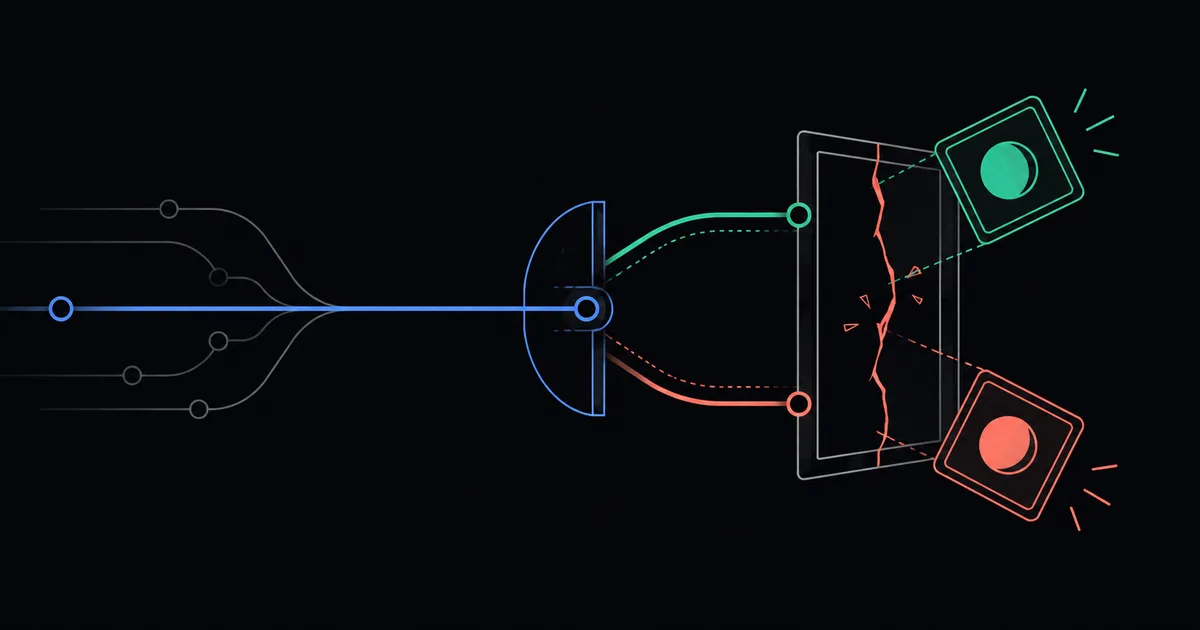
A prediction market resolves when someone proposes the outcome and nobody successfully disputes it. On Polymarket the proposal goes through the UMA optimistic oracle: the proposer posts a 750 dollar bond in USDC.e, a two hour challenge period opens, and if nobody challenges, winning shares pay 1 dollar each. If someone challenges, the question escalates to token holder voting, which is slower and occasionally lands somewhere the plain reading of the question would not.
What is a resolution source?
A resolution source is the specific place a market looks to decide the answer. It is written into the market rules, published under the order book, and it is the actual question being traded.
This is the single most common misreading in prediction markets. A market titled "Will the deal be signed?" does not resolve on whether a deal was signed. It resolves on whether the named source said so, by the named deadline, in the form the rules describe. Those two things usually agree. When they do not, the rules win.
Before making any call on an event, read the rules text, not the title. If the rules leave room for argument, the price you are looking at contains that argument.
How does an optimistic oracle work, in plain words?
Optimistic means the system assumes the first answer is right unless somebody objects and puts money behind the objection.
The sequence on Polymarket is short. Someone proposes the outcome and posts a bond of 750 dollars in USDC.e, which is forfeited if the proposal fails. The proposal enters a challenge period of two hours. If nobody disputes it, the resolution is treated as correct, the proposer gets the bond back plus a reward, holders of winning shares receive 1 dollar per share, and losing shares become worthless (Polymarket Help Center, 11 January 2026).
Nothing here is a court, and nobody at Polymarket reviews it by hand. The whole design rests on the assumption that somebody with money at stake will notice a wrong answer within two hours.
What happens inside the dispute window?
A dispute escalates the question to UMA's Data Verification Mechanism, which is a vote of people who have staked UMA tokens.
The mechanics are published. Stakers commit secret votes during a 24 hour commit period and reveal them in a following 24 hour reveal period. A dispute resolves when at least 65 percent of staked UMA is cast in favor of a single outcome. Stakers who did not vote, or who voted against the majority, are slashed, and the slashed amount is redistributed to the majority voters. Unstaking requires a one week wait (UMA Documentation).
Read that incentive carefully. Voters are rewarded for landing on the majority answer, not for landing on the true one. In almost every case those coincide, because most questions have an obvious answer. When they do not, the mechanism is a popularity contest weighted by tokens, and the people holding the most tokens can also hold positions in the market being decided.
Which resolutions actually went wrong?
Two cases are worth knowing because they failed in different ways.
| Market | Dates | Volume at stake | Proposed outcome | Final outcome | Failure mode |
|---|---|---|---|---|---|
| Ukraine minerals deal with the Trump administration before April | Resolved 25 to 27 March 2025 | Over 7 million USD | Yes | Yes, stood | Voting power concentration |
| Zelenskyy photographed wearing a suit between 22 March and 30 June 2025 | Resolved 1 July 2025 | 237 million USD | Yes, then flipped | No | Ambiguous criteria |
The Ukraine case was a governance problem. The market asked whether Ukraine would agree to a minerals deal with the Trump administration, and it resolved to yes although no such agreement had been reached at the time. The outcome was traced to a holder of roughly 5 million UMA governance tokens spread across three accounts, about 25 percent of the votes cast. Polymarket said on its Discord that because this was not a market failure it could not issue refunds, while calling the episode unprecedented and promising better monitoring (The Defiant, March 2025).
The Zelenskyy case was a definition problem. The market asked whether Volodymyr Zelenskyy would be photographed or videotaped wearing a suit between 22 March and 30 June 2025. On 24 June 2025 he appeared at a NATO event in the Netherlands in a black jacket, matching trousers and a collared shirt, described as a suit by more than 40 outlets. The oracle first ruled yes, the ruling was challenged, and the market finally resolved no on 1 July 2025 on the basis that credible reporting consensus had not been established, on 237 million dollars of volume (Decrypt, 9 July 2025).
Neither case is evidence that prices are useless. Both are evidence that the resolution layer is a separate risk from the forecasting layer, and that it is the layer nobody prices carefully.
What does resolution risk do to a price?
It puts a floor under the losing side and a ceiling over the winning one.
If a market's rules are clean, a settled outcome trades at 99 or 1 within minutes of the news. If the rules are arguable, the price stalls in the 80s or 90s even after the event is obvious, because traders are pricing two things at once: whether the thing happened, and whether the oracle will agree that it happened.
Three practical readings follow.
- A price stuck below 95 after an outcome is public usually means resolution doubt, not outcome doubt.
- A market whose rules name a single official source is safer than one that names "credible reporting".
- The wider the gap between the headline question and the rules text, the more the price is measuring the oracle rather than the world.
How does resolution work for a call on insiderz?
A call on insiderz is scored against the same resolution as the underlying event, on the same events Polymarket lists. There is no separate judgment and no appeal.
The call itself is locked the second it is posted. The time and the Polymarket price for that event at that moment are frozen with it, and nothing can be edited or deleted afterwards, not by you and not by us. When the event resolves, the call is scored against the price it was locked at, so calling yes at 20 cents and being right counts for far more than calling yes at 95 cents and being right.
Because resolution wording drives the outcome, reading the rules before calling is not optional. Open events are on Events, each with its own rules. The leaderboard ranks people on Beats market, Events, Edge and Early, with no money involved at any point.
What should you check before calling an event?
Five questions, in order.
- What exactly does the rules text say, as opposed to the title?
- What source decides, and is it one named source or a judgment call?
- What is the deadline, and in which time zone?
- What happens if the event partially happens, or happens late?
- Has this market type been disputed before?
If you cannot answer the first two, you are not forecasting the event. Related reading: how a price becomes a probability and when is the market wrong.
Questions people ask
- Who decides how a Polymarket market resolves?
- A resolution source written into the market rules, enforced through the UMA optimistic oracle, where anyone can dispute a proposed outcome within a two hour window.
- What happens if a resolution is disputed?
- It escalates to UMA token holder voting, a 24 hour commit period followed by a 24 hour reveal period, resolved when at least 65 percent of staked UMA backs one outcome.
- Can a market resolve the wrong way?
- Yes, and it has. That is why the exact wording of the resolution criteria matters more than the headline question.
- How much is the bond to propose a resolution on Polymarket?
- 750 dollars in USDC.e as of January 2026, forfeited if the proposal is unsuccessful, returned with a reward if it stands.
Sources
- How Are Prediction Markets Resolved?, Polymarket Help Center, 11 January 2026
- How does UMA's oracle work?, UMA Documentation
- Polymarket's $7M Ukraine Mineral Deal Debacle Traced to Oracle Whale, The Defiant, March 2025
- Polymarket Rules 'No' on $237M Controversial Bet Over Zelenskyy's Suit, Decrypt, 9 July 2025