Connect wallet

Prediction markets

10 posts

The 2026 US midterms in prediction markets

The 2026 US midterm elections are on Tuesday 3 November 2026. As of 4 September 2026, Polymarket priced the Democratic Party at 89.5 cents to control the House and 51.5 cents to control the Senate, on $10.1 million and $4.1 million of traded volume. The poll averages point the same way on the House. The Senate is the question nobody has settled.

9 min read

Are prediction markets accurate? What the data says

Prediction markets are accurate where they are deep and short dated, and unreliable where they are not. On a cross platform sample of resolved markets measured to 14 October 2025, Polymarket scored a Brier loss of 0.1652 and Kalshi 0.1982, against 0.25 for always guessing 50 percent. On the 2024 US election specifically, one study found that only 67 percent of Polymarket markets priced the eventual winner above 50 percent.

6 min read

How to beat the market: a practical guide

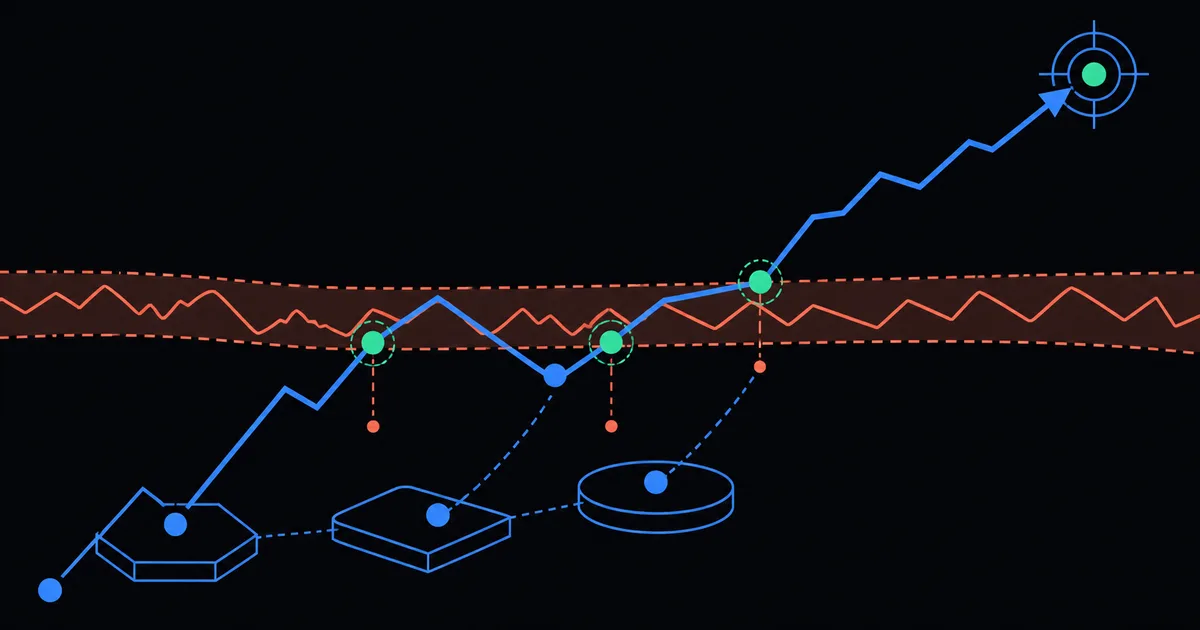
Beating a prediction market means being right where the price was wrong, often enough and on enough events that luck stops being the explanation. There is no trick that works everywhere. What works is a method: start from the price rather than your opinion, disagree only in the few situations where prices are known to be soft, put a specific number on it, and score every call against the price at the moment you made it.

10 min read

Brazil's 2026 election: what prediction markets say

Brazil votes on Sunday 4 October 2026, with a runoff on 25 October if no presidential candidate passes half the valid votes. As of 4 September 2026, Polymarket priced Luiz Inácio Lula da Silva at 55.5 cents to win the presidency and Flávio Bolsonaro at 41 cents, on 142.9 million dollars of traded volume. The polls have the runoff closer than that.

8 min read

How prediction markets resolve, and why disputes happen

A prediction market resolves when someone proposes the outcome and nobody successfully disputes it. On Polymarket the proposal goes through the UMA optimistic oracle: the proposer posts a 750 dollar bond in USDC.e, a two hour challenge period opens, and if nobody challenges, winning shares pay 1 dollar each. If someone challenges, the question escalates to token holder voting, which is slower and occasionally lands somewhere the plain reading of the question would not.

6 min read

Kalshi vs Polymarket vs Metaculus vs insiderz

Kalshi is a CFTC regulated US exchange where you trade event contracts with dollars. Polymarket is a crypto exchange, mostly offshore, blocked by order in a growing list of countries. Metaculus is a no money forecasting platform scored on accuracy. insiderz is a no money platform where your call is scored against the live Polymarket price. Money, regulator and what the ranking measures are the three real differences.

8 min read

Play money vs real money: does money help forecasts?

Money does not appear to buy accuracy. The head to head test that settled the question ran a real money exchange against a play money exchange across 208 NFL games in 2003 and found no statistically significant difference on four separate scoring rules. Cross platform Brier scores measured to October 2025 put the money and no money platforms in the same band. What money reliably buys is attention, liquidity and a way for large holders to push a price.

6 min read

Prediction market glossary: 40 terms in plain words

Forty terms used in prediction markets and forecasting, each defined in one sentence with one example. The terms are grouped by where you meet them: market mechanics, probability and scoring, resolution, platforms, and the words insiderz uses. Nothing here assumes you have traded anything.

11 min read

Prediction markets: how a price becomes a probability

A prediction market is a market where people trade contracts that pay 1 if an event happens and 0 if it does not. The last traded price sits between 0 and 1, so a contract at 34 cents reads as a 34 percent chance. The price is a claim about the future made by everyone trading at once. Like any claim, it can be beaten.

7 min read

When is the market wrong? Six situations

A prediction market price is a hard benchmark on average and a soft one in specific places. The price is most beatable when almost nobody is trading the question, when the information is not the kind traders watch, when the answer needs specialist knowledge, when the resolution rule says something different from the title, at the far ends of the probability scale, and where the price itself changes behaviour. Everywhere else, assume the price is right.

9 min read