Polymarket in Spain: what happened, what stays legal
By insiderz8 min read
Polymarket is blocked in Spain. On 26 May 2026 the Dirección General de Ordenación del Juego (DGOJ), the state gambling regulator, opened a sanctioning case against Polymarket and Kalshi for operating without a Spanish licence, and the Ministry of Social Rights, Consumer Affairs and 2030 Agenda ordered access providers to block both sites as a precautionary measure until the case is decided. Spain treats a bet on an uncertain future outcome as gambling, whatever the technology.
Last checked: 4 September 2026.
This is not legal advice.
What happened in May 2026?
Spain acted in one step, not two. The same announcement of 26 May 2026 opened a sanctioning file and ordered the precautionary block, so there was no warning period and no negotiation phase. The Ministry's note says the case was notified through publication in the Boletín Oficial del Estado, after attempts to notify the operators directly at their known addresses abroad failed.
| Date | What happened | Who |
|---|---|---|
| 26 May 2026 | Sanctioning case opened against Polymarket and Kalshi for operating without a licence | DGOJ |
| 26 May 2026 | Precautionary block of polymarket.com and kalshi.com ordered, pending the final decision | Ministry of Social Rights, Consumer Affairs and 2030 Agenda |
| 26 May 2026 | Case notified by publication in the Boletín Oficial del Estado | DGOJ |
| By 5 June 2026 | Telecom operators given seven to ten days from notification to apply the block | Spanish access providers |
| Three to four months from 26 May 2026 | Estimated time to a final decision on the case | DGOJ |
| 4 September 2026 | No final decision published, precautionary block still in force | DGOJ |
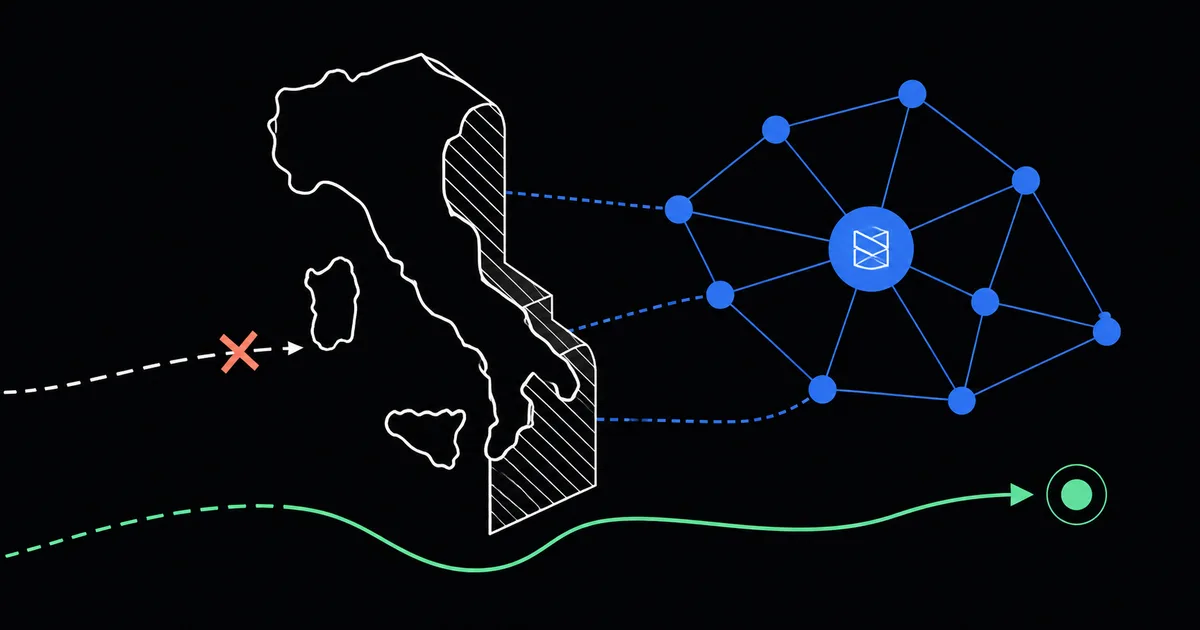
The block is technical, not commercial. Spanish access providers redirect requests for the two domains to an official page carrying the warning that you are trying to reach the website of a gambling operator without a licence, as Bandaancha documented on the day the order was issued.
Why did the DGOJ act?
Because Spanish gambling law starts from what is risked, not from what the product is called. Article 3.a of Ley 13/2011 defines gambling as any activity in which sums of money or objects that can be valued economically are risked on future and uncertain results, dependent to some degree on chance, and which allow that value to be transferred between participants. An event contract on an election or a court ruling fits that sentence.
Once the activity is gambling, article 39.a makes it a very serious infringement to organise, hold or run it without the corresponding licence. Article 42.3 sets the fine for very serious infringements at one million to fifty million euros, and allows the closure of the information society services that support the activity. The blocking power itself is article 47, which lets the regulator order intermediary service providers to suspend the service, under the terms of the Spanish e-commerce law 34/2002.
One naming note that matters when you read the statute. Ley 13/2011 names a Comisión Nacional del Juego, a body that was later suppressed. Under the second additional provision of Ley 3/2013, references to it are read as references to the Dirección General de Ordenación del Juego, which is the authority acting here.
The DGOJ also framed the case as consumer protection. Its note says unlicensed operators lack the guarantees required in Spain, naming identity verification, controls that keep out minors and self-excluded players, and supervision standards. The same reasoning was reported in the trade press, for example by iGaming Business.
Could Polymarket get a Spanish licence?
Spain is unusual here: the answer is probably yes, in principle. Several European regulators blocked Polymarket because bets on politics cannot be licensed in their country at all. Spain has a licence category that covers exactly those events.
Orden EHA/3079/2011 approves the basic rules for a game type called Otras apuestas de contrapartida, other fixed odds bets, defined as bets on events whose nature is not sport or horse racing but belongs to society, the media, politics, the economy, entertainment, culture or similar fields. Running it needs a singular licence on top of the general licence for the betting category, and the operator has to file its betting programme with the regulator at least ten days in advance, which can suspend a programme or require changes.
So the Spanish objection is procedural, not conceptual. The problem in the DGOJ case is the missing licence, the missing age and identity checks and the missing self exclusion register, not the subject matter of the markets. That also means the Spanish situation could change faster than the Dutch or German one, in either direction.
What does the block mean for a user in Spain?
It means the site does not load on a Spanish connection and no Spanish licensed route to the platform exists. The order is addressed to the platform and to the access providers, so it does not by itself close an account or seize a balance. As of 4 September 2026 neither the Ministry nor the DGOJ has published a final decision in the case, so the precautionary block continues.
Reporting on the day the order was issued, Xataka noted both sites were still reachable while operators worked through the seven to ten day window. That gap is normal and it is not a sign the order was withdrawn.
Why we do not recommend a VPN
Spain is one of the few countries in Europe that wrote the player into the statute. Article 41.f of Ley 13/2011, added in 2021, makes it a minor infringement to take part from Spain, through the use of techniques that mask Spanish territorial IP addresses, in the gambling activities covered by the law when offered through pages other than those legally authorised. Article 42.1 sets the sanction for minor infringements at a written warning or a fine of up to 100,000 euros.
Prosecutions of individual players are rare. The point is that the exposure exists in writing, which is not true in most of the countries where Polymarket is blocked. A VPN also breaks the platform's own terms of use, which can mean a closed account and funds you cannot move, and it does not change which law applies to a person sitting in Madrid or Valencia.
What stays legal in Spain: forecasting without money
Read article 3.a again and the way out is visible in the text. Gambling requires money or economically valuable objects to be risked, and requires that value to be transferable between participants. Remove the stake and the prize and there is nothing for the licence regime to attach to, which is why the DGOJ has never acted against forecasting tournaments, research platforms or public prediction records.
Three things remain available in Spain. Reading published probabilities, because a price is information rather than a wager. Taking part in forecasting competitions that pay nothing. And putting a dated public prediction on the record so that it can be checked when the event resolves. For the general test behind all three, see is it gambling if there is no money, and for the wider picture see where Polymarket is blocked, country by country.
How a call works on insiderz
insiderz lists the same yes or no events as Polymarket and takes no money. You post a call: yes or no, plus how sure you are. The call is locked the second it is posted, with the time and the Polymarket price at that moment frozen into it. It cannot be edited or deleted, not by you and not by us.
When the event resolves, the call is scored against the price the market was showing when the call was made. Being right where the market was wrong is what counts. The public ranking of insiders shows four columns: Beats market, Events, Edge and Early. Calls go public after a delay, and followers with live access see them the moment they are made.
There is no money, no prize and no token anywhere in that loop, so nothing is risked in the sense article 3.a uses. Identity is a wallet signature, so no email and no name are required. You can browse the open events, the insiders and the calls without an account, and bots can play through the public API under the same rules.
Where to check the current status
Two places answer the question at any date. The DGOJ newsroom publishes its actions against unlicensed operators, and a final decision in this case would appear there. The Boletín Oficial del Estado is where the case was notified in the first place and where a resolution would be published, so a search for the operator names in the BOE archive settles whether the precautionary block has become a final sanction.
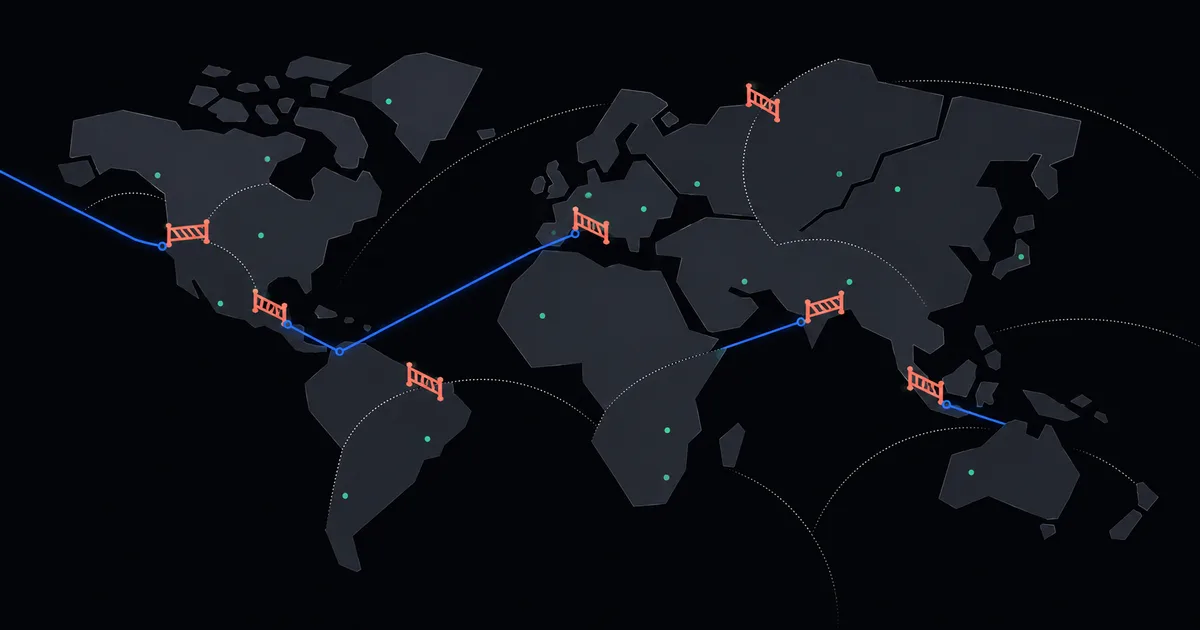
For the country by country picture, including the states that punish the player as Spain does, see where Polymarket is blocked. For the closest parallel case, with an ISP block, a court challenge and a lifted and reimposed listing, see Polymarket blocked in Italy.
Questions people ask
- Is Polymarket legal in Spain?
- No. On 26 May 2026 the Dirección General de Ordenación del Juego opened a sanctioning case against Polymarket and Kalshi for operating without a Spanish licence, and the Ministry of Social Rights, Consumer Affairs and 2030 Agenda ordered a precautionary block of both sites. The block is still in force as of 4 September 2026.
- Can I use a VPN to reach Polymarket from Spain?
- Spain is one of the few countries that sanctions the player. Article 41.f of Ley 13/2011 makes it a minor infringement to take part from Spain, using techniques that mask a Spanish IP address, in gambling offered through pages other than the legally authorised ones. Article 42.1 sets the penalty at a written warning or a fine of up to 100,000 euros.
- Is Kalshi blocked in Spain too?
- Yes. The same DGOJ case and the same blocking order of 26 May 2026 cover both polymarket.com and kalshi.com.
- Could Polymarket get a Spanish licence?
- In principle yes. Orden EHA/3079/2011 creates a licence type called Otras apuestas de contrapartida for bets on events in society, media, politics, economy, entertainment and culture. It requires a singular licence and a betting programme filed with the regulator, which can suspend it.
- Is there a legal way to forecast events in Spain?
- Yes. Article 3.a of Ley 13/2011 defines gambling as risking money or economically valuable objects on an uncertain future result. With no stake and no prize there is nothing to license, so forecasting the same events for a public record stays legal.
Sources
- Ministerio de Derechos Sociales, Consumo y Agenda 2030, Consumo abre expediente sancionador y ordena cautelarmente el bloqueo de Polymarket y Kalshi, 26 May 2026
- Dirección General de Ordenación del Juego, La DGOJ abre expediente sancionador a las plataformas Polymarket y Kalshi y ordena el bloqueo de sus webs, 26 May 2026
- Boletín Oficial del Estado, Ley 13/2011 de 27 de mayo, de regulación del juego, consolidated text
- Boletín Oficial del Estado, Orden EHA/3079/2011 de 8 de noviembre, reglamentación básica de Otras apuestas de contrapartida
- Xataka, El Gobierno bloquea a los mercados predictivos Kalshi y Polymarket por no tener licencia de juego, 26 May 2026
- Bandaancha, Consumo ordena a las operadoras bloquear Polymarket y Kalshi, 26 May 2026
- iGaming Business, DGOJ blocks Polymarket and Kalshi over unauthorised operations, 26 May 2026
- crypto.news, Spain blocks prediction markets Polymarket and Kalshi, 26 May 2026